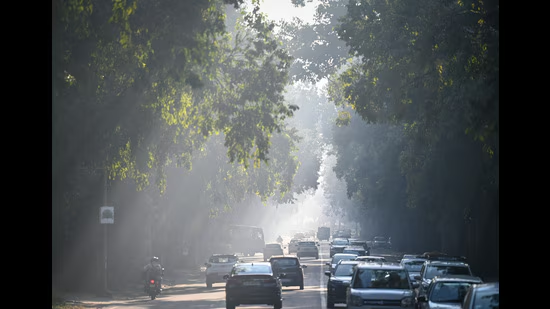
Western Disturbance Keeps Delhi’s Winter Mild, But Air Quality May Soon Dip Again
Delhi woke up to another relatively mild winter morning on Wednesday as an ongoing western disturbance kept the minimum temperature from dipping too low. While the city saw a slight chill earlier this week, temperatures have been climbing steadily, offering a brief pause from the harsher winter conditions that residents usually anticipate in December.
How Western Disturbances Are Impacting Delhi’s Weather
The minimum temperature recorded on Wednesday was 10 degrees Celsius, which is considered normal for this time of the year. This comes after a rising trend through the week, with the minimum at 9.2 degrees on Tuesday, 8.7 degrees on Monday and 8 degrees on Sunday.
The India Meteorological Department (IMD) expects the temperature to dip again by 2 to 3 degrees by Friday, but experts say the relief will be short-lived.
According to Mahesh Palawat, vice president at Skymet, Delhi may see temperatures fall briefly before rising again due to a series of western disturbances expected to influence the northern plains until December 18. These systems typically bring cloud cover, change wind patterns and temporarily prevent temperatures from dropping sharply.
Daytime Temperatures Remain Stable
While the minimum temperatures have fluctuated slightly, Delhi’s daytime readings remain stable. On Wednesday, the city recorded a maximum of 25.2 degrees Celsius, which is around normal for early December. Forecasts suggest the maximum temperature will hover between 23 and 25 degrees until Friday.
This combination of warmer nights and pleasant days has brought a short-lived comfort to residents, many of whom were bracing for a sudden onset of colder conditions typical of mid-December.
Winds Help Improve Air Quality — But Not for Long
Perhaps the biggest relief has been the improvement in Delhi’s air quality. Stronger winds continued to clean the air on Wednesday, pushing the Air Quality Index (AQI) to a two-day improvement streak.
Delhi’s 24-hour AQI stood at 259 in the poor category at 4 pm. While still far from healthy, it was noticeably better than the previous day. For comparison:
- Monday: AQI 314
- Tuesday: AQI 282
- Wednesday: AQI 259
Wednesday’s AQI also marked Delhi’s cleanest air in more than a month. The last time the city recorded a similar reading was on November 2, when the AQI touched 202.
However, this improvement has been rare. Since November 1, Delhi has seen only five days with air in the poor category, with most days slipping into the very poor or severe zones.
Weather Agencies Warn of Fresh Deterioration
While the current improvement offers a welcome break, forecasting models indicate that the relief won’t last.
The Air Quality Early Warning System (EWS) has predicted a slide back into the very poor category starting December 11. The period between December 11 and December 13 is expected to see a steady decline in air quality.
Looking further ahead, the system’s outlook from December 14 suggests that Delhi’s air is likely to remain stuck in the very poor category for at least six days.
This expected dip is linked to weakening winds, reduced dispersion of pollutants and the return of colder nights — conditions that often lead to an accumulation of particulate matter near the ground.
Understanding AQI Categories
The Central Pollution Control Board (CPCB) uses the following categories to classify air quality:
- 0–50: Good
- 51–100: Satisfactory
- 101–200: Moderate
- 201–300: Poor
- 301–400: Very poor
- 401–500: Severe
Delhi’s AQI of 259 places it in the poor category, but dangerously close to the very poor threshold of 301. Even in the poor category, people with respiratory issues are advised to reduce outdoor activity, especially during early mornings and late evenings.
Why This Weather Pattern Matters
The rising minimum temperature is a direct result of western disturbances, which tend to prevent rapid cooling of the lower atmosphere. As a result, Delhi experiences:
- Cloudier skies
- Warmer nights
- Mild day temperatures
- Increased wind activity
These factors have temporarily improved the air quality, but once the disturbances pass, conditions usually reverse quickly.
Cleaner air during such brief windows is common every winter, usually when wind speed picks up. But as soon as the winds slow down and cold, dense air settles over the region, pollution spikes again.
What Residents Can Expect in the Coming Days
Based on forecasts from IMD and EWS, residents should prepare for:
- A slight dip in minimum temperature by Friday
- Rising minimum temperatures again due to further western disturbances
- Stable maximum temperatures between 23 and 25 degrees
- Deteriorating air quality starting December 11
- A prolonged period of very poor air starting mid-December
This means warmer nights, pleasant afternoons and worsening air quality — a combination that has become common in Delhi’s winter months.
Why Pollution Continues Despite Better Winds
Improved winds helped disperse the pollutants temporarily, but Delhi’s air quality challenges run much deeper. Winter in the capital brings together multiple factors:
- Increased emissions from vehicles
- Seasonal stubble burning in neighboring states
- Industrial activity
- Construction dust
- Household heating and biomass burning
- Calm winds during cold spells
- Temperature inversion, trapping pollutants close to the ground
Even when one or two of these factors improve, the others keep the air heavily polluted. Until stronger, more sustained winds arrive or emissions reduce significantly, air quality is expected to fluctuate within poor to very poor categories.
Final Outlook
Delhi’s weather is currently in a transitional phase, with western disturbances playing a central role. While temperatures remain moderate and air quality has shown temporary improvement, forecasts warn that the city may soon slip back into unhealthy pollution levels.
Residents are advised to monitor AQI updates closely, reduce prolonged outdoor exposure during high-pollution hours and take precautions, especially those with respiratory conditions.
Winter in Delhi is always a mix of pleasant days and polluted air, and this season appears no different. The coming week will bring more fluctuations, but cleaner air may remain out of reach for now.