Delhi‑NCR is reeling under a severe air‑quality crisis as the Air Quality Index rose into “hazardous” territory on 12 November 2025, forcing authorities to implement Stage III of the Graded Response Action Plan. The residents of the national capital region are being urged to exercise caution, amid reports of continuous threat from pollution levels due to its ill effects on public health and daily activities, thus making environmentalists and policymakers worried.
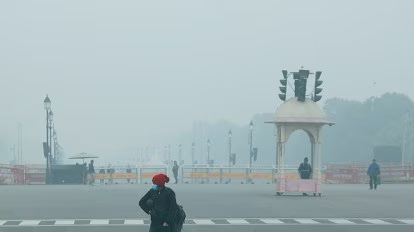
The AQI in Delhi‑NCR recorded over 400 in many monitoring stations, according to the Central Pollution Control Board, a level considered extremely hazardous for all age groups. Widespread smog and thick haze have reduced visibility across the city, with prominent landmarks shrouded in a dense layer of pollution. Experts said the rapid deterioration of air quality in recent days is a result of a combination of factors, including crop residue burning in neighbouring states, vehicle emissions, construction dust, and low wind speeds.
The Delhi government, on its part, has enforced Stage III of the GRAP, which involves severe measures to reduce exposure to pollution and restrict sources of particulate matter. Schools up to Class 5, under these instructions, have moved to hybrid learning, blending online-offline classes, to protect children from long exposure to toxic air. Companies have also been advised to work from home wherever possible to reduce vehicular traffic and minimize emissions from office commutes.
Construction and demolition activities have been temporarily suspended, and the authorities are strictly monitoring industrial emissions in surrounding areas. Further, measures to curb the use of diesel generators and the burning of waste in open areas have been reinforced. Traffic restrictions have been imposed in high‑pollution zones, while citizens are advised to limit outdoor activities and use protective masks while going out.
Health experts have warned that the exposure to high levels of particulate matter, especially PM2.5, could trigger respiratory problems, complications of the cardiovascular system, and heighten existing diseases like asthma and bronchitis. Hospitals across Delhi‑NCR reported a rise in the number of patients coming for treatment due to difficulty in breathing, irritated eyes, and other pollution-related disorders. “The situation is critical. Long-term exposure at these levels can have severe health consequences,” said Dr. Meera Sethi, a South Delhi-based pulmonologist.
Residents have complained of the worsening air quality, citing how it affects daily living and overall well-being. Many have canceled outdoor activities, restricted children’s playtime outdoors, and installed air purifiers in their homes as ways to protect themselves from pollution. Social media platforms are bombarded with images of the smog-covered city, prompting discussions on the urgent need for long-term solutions.
Environmentalists have stressed time and again that while temporary measures like the implementation of GRAP Stage III are essential, durable solutions can only be found through concerted efforts in many sectors. They have called for the enforcement of stricter pollution control norms, promotion of public transport, increase in green cover, and out-of-the-box strategies to manage crop residue burning in neighboring states. “Delhi alone cannot handle the problem of air pollution. Regional cooperation and viable policies will ensure protection of the health of millions,” said Ananya Verma, an environmental researcher.
Consequently, authorities have issued awareness campaigns on the measures that could be put in place for protection, such as the use of N95 masks, avoiding outdoor exertion during hours of peak pollution, and monitoring AQI updates through official apps and notifications. The Delhi Disaster Management Authority continues to coordinate with municipal corporations, transport authorities, and health departments on the implementation of GRAP measures and taking all possible steps to minimize public exposure to hazardous air.
According to meteorologists, low wind speeds and cooler temperatures later in the winter season will extend the air-quality crisis, making it now more important than ever for residents to remain alert. Experts advise continued monitoring of AQI levels and adherence to recommended guidelines to ensure safety during this ongoing environmental emergency. The crisis in Delhi- NCR air quality underlines the need for a sustainable approach to the management of urban air, which is interlinked with government policy, technological intervention, and citizen participation. Though short-term emergency measures check immediate risks, the long-term health of millions depends upon firm, coordinated, and eco-sensitive action.