Delhi’s public transport network has received a strong boost as Delhi Transport Corporation reported a significant rise in its monthly earnings, signalling renewed public confidence and increasing ridership across the capital. After years of operational losses, low occupancy of buses, issues with the aging fleet, and private vehicle competition, DTC’s latest financial performance marks a promising turn for the city’s transport ecosystem.
As per official data accessed this week, the monthly revenue of DTC has shot up to nearly ₹100 crore, a marked increase compared to the preceding months. The hike is attributed to an increase in the number of passengers riding the buses, better route rationalisation, increased frequency on high-demand corridors, and various operational reforms brought in by the administration of Delhi. For a city buckling under severe air pollution, strained road infrastructure, and growing traffic congestion, the improvement serves as a silver lining.
More Commuters Returning to Buses
This includes a rise in daily passenger volume, one of the most significant contributors to the jump in revenue. Over the past several months, people have been getting back into the public buses for daily travel, especially office-goers, students, and the low-income groups dependent on affordable transport. The recent expansion of electric buses, enhanced punctuality, and better last-mile connectivity have contributed to an efficient and reliable travel experience.
Private vehicle growth has thrown up increasing congestion on Delhi’s roads, and commuters have started to discover that DTC buses—especially the new, low-floor, and electric ones—have smoother and more predictable travel. Public transport now makes sense once more as fuel prices go up and parking becomes a scarce commodity, especially downtown
Fleet Modernisation Driving Performance
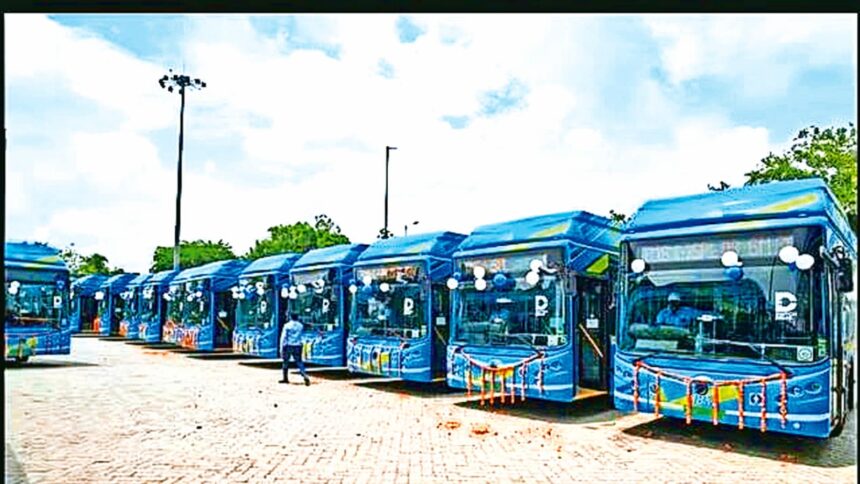
A major reason for DTC’s better financial health is the modernization of its fleet. Hundreds of new electric buses were rolled out across Delhi over the past two years, reducing the operational cost and environmental impact drastically. Electric buses are cheaper than diesel buses in terms of operational cost per kilometre, while maintenance is easier and more predictable.
Continued investment by the government in electric mobility, supplemented by subsidies provided both by the centre and the states, makes DTC one of the largest electric-bus operators in the country. The responses from passengers also indicate that electric buses are more comfortable, less noisy, and provide smoother rides.
Officials further noted that as more electric depots come into operation, efficiency will increase even more.
Better route planning and digital reforms
Another key driver of financial gains has been route optimization. DTC and DIMTS (Delhi Integrated Multi-Modal Transit System) have rearranged several routes to match real-time demand, thus cutting down on fuel wastage and unnecessary bus circulation.
Moreover, digital interventions such as GPS-based tracking of buses, live location of buses, and e-ticketing have smoothed operations. The Delhi government has integrated the “One Delhi” app that enables commuters to track bus arrivals, issue tickets, and plan journeys with greater efficiency.
The adoption of contactless ticketing and digital payments reduced revenue leakage and improved efficiency overall.
Air Pollution & Public Transport Link
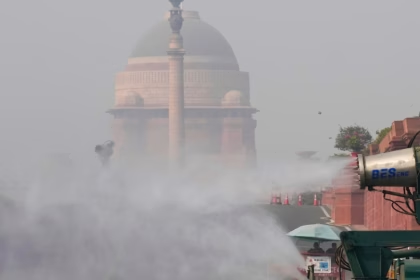
This improvement in DTC’s performance is timely. Delhi’s air pollution remains acute throughout the year, and experts have time and again highlighted the need to take people away from private vehicles and shift them to public transport.
The more dependable buses translate into fewer cars and two-wheelers on the road, thus helping reduce emissions, congestion, and noise pollution. Now that DTC is showing financial strength, the government may have more room to reinvest in public mobility, increase fleet size, and improve depot infrastructure.
Environmental groups have welcomed the improved earnings, noting that strong public transport is essential for any long-term pollution control strategy.
Challenges Remain
Despite the progress, DTC still faces challenges. Peak-hour overcrowding persists on many routes, and rural or outer-Delhi stretches lack adequate coverage. Maintenance of older buses continues to burden the system, and staff shortages remain an issue.
Apart from this, integration remains a key concern: Delhi still requires a seamless, integrated network for buses, metro lines, feeder services, and last-mile e-mobility options. According to experts, only a fully integrated system can ensure a permanent shift of commuters away from private vehicles.
A Positive Turning Point For the time being, this increase in DTC’s monthly earnings is a good omen for Delhi’s transport future. The numbers indicate that people are gradually gaining faith in public transport and that policy reforms have started to yield concrete outcomes. The Delhi government may well be on its way to creating a cleaner, more efficient, and sustainable urban mobility system if the current momentum is carried forward with more electric buses, smarter route management, and better commuter experience.