IIT Delhi Sets Up Committee to Investigate Conference
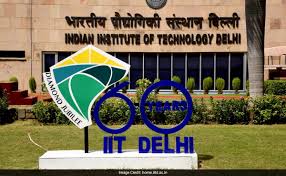
The Indian Institute of Technology (IIT) Delhi has formed a fact-finding committee to investigate concerns raised over a recent academic conference titled “Critical Philosophy of Caste and Race” held from January 16 to 18. The announcement came on social media platform X, where the institute said it had also sought an explanation from the faculty involved.
The panel will include independent members tasked with reviewing the conference, its speakers, and the content discussed. While the institute has not disclosed the committee members or a timeline, it said “appropriate actions will be initiated based on the committee’s findings.”
About the Controversial Conference
The three-day event was organized by the Department of Humanities and Social Sciences at IIT Delhi. It marked “25 Years of Durban: Indian Contributions to Combating Caste and Racism”, referencing the 2001 World Conference Against Racism in Durban, South Africa.
Professor Divya Dwivedi, who delivered the introductory note, clarified the conference was purely academic and had all necessary approvals.
“The conference is academic in its aim and scope. It’s designed to generate critical thinking on social inequalities and builds on existing academic research and publications, including my own,” said Prof Dwivedi.
“The programme had been in the public domain even before the event.”
What Sparked the Probe
IIT Delhi has described the concerns as “serious”, but has not elaborated on the exact nature of the issues that triggered the investigation. Officials from the institute and the department of Humanities and Social Sciences declined to comment further when approached.
Despite the probe, students who attended the event described it as a scholarly and respectful discussion.
“There was no sloganeering. It was purely an academic discussion. Topics like caste and race have been studied and debated in academic circles for years,” said a first-year PhD student, speaking on condition of anonymity.
Conference Highlights
The conference featured a range of lectures and panel discussions covering topics such as:
- At the Crossroads of Caste, Race, and Gender: Dalit Women at the Durban Conference
- Caste, Desire, and Danger: Pavalabai Bhalerao’s Revolt
- Dalit Rights to Global CDWD: From Naming to Norms, From Norms to Justice
- Towards Raceless and Casteless Humanism: Understanding the Movements Against Race-Caste Power
In addition, three books were launched during the conference, including:
- Burnt: Beyond Return (2025) by Basudev Sunani
- Chunduru Kathalu (2026) by Sowjanya Tamalapakula
A detailed day-wise and topic-wise schedule of the event was also made available on the Humanities and Social Sciences department’s website.
Academic vs Public Debate
This incident highlights the tension between academic freedom and public scrutiny in higher education. While IIT Delhi maintains the conference was legitimate and well-planned, the creation of a fact-finding panel indicates concerns about potential public perception, choice of speakers, and content covered.
Experts in academic governance note that such committees are often formed to ensure accountability while balancing intellectual freedom:
“Universities must protect free scholarly inquiry, but they also need mechanisms to address controversies responsibly,” said a higher education expert.
What’s Next
The fact-finding committee is expected to review all proceedings, speaker selections, and content presented at the conference. Depending on its findings, IIT Delhi may take further action or provide clarifications to address any outstanding concerns.
Until then, the debate around “Critical Philosophy of Caste and Race” continues, reflecting broader discussions about caste, race, and social inequalities in academic spaces in India.
IIT Delhi’s move to form a committee demonstrates a careful approach to handling sensitive academic subjects while maintaining accountability. The incident underscores the ongoing challenge for educational institutions to balance academic freedom with public accountability, especially on topics as sensitive as caste and race.