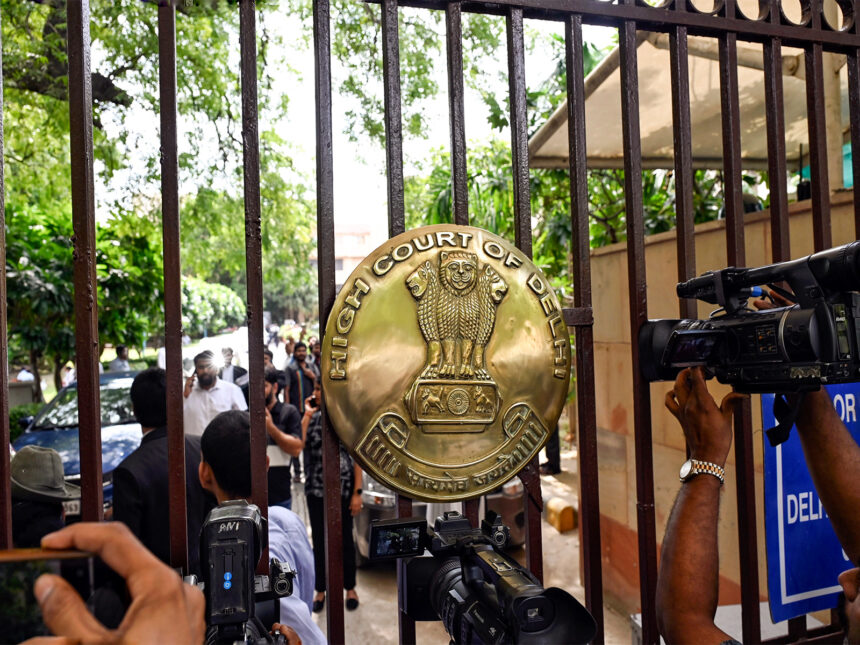
In a landmark order that underlines the need for institutional autonomy and democratic governance at universities, the Delhi High Court has quashed the decision to disband the Teachers’ Association at Jamia Millia Islamia (JMI). The court noted that such moves, made without transparency and following due procedure, erode the spirit of academic freedom and participatory governance that higher education institutions are supposed to promote.
The case arose from the administration of the university’s contentious decision earlier this year to disband the Jamia Teachers’ Association (JTA), alleging procedural irregularities in its operations. The administration had stated that the association had not abided by some institutional norms and had been working “beyond its mandate.” The action provoked mass alarm and outrage among staff members, who charged that the disbandment was arbitrary and intended to muffle dissent and staff representation in important academic issues.
Hearing the plea of members of the disbanded JTA, the Delhi High Court declared that the university administration had gone beyond its powers and the order of dissolution could not pass the scrutiny of law. Justice Manmeet Pritam Singh Arora, in delivering the judgment, reiterated that public universities need to find a balance between administrative control and respect for internal democracy. “The cancellation of a teachers’ association — without adherence to canons of natural justice or affording members a reasonable opportunity to react — is against both institutional morality and constitutional safeguards,” the court noted.
The court ordered the university to reinstate the Jamia Teachers’ Association forthwith and to hold discussions with the representatives of the faculty so that any issues are resolved through proper procedure. It also warned university authorities against adopting “coercive or arbitrary steps” that might undermine trust and transparency in the academic environment.
The ruling has been welcomed by the academic world as a landmark reaffirmation of teachers’ rights and independence in higher education. Several educationists and faculty associations throughout India, including Delhi University and Jawaharlal Nehru University, issued statements applauding the judgment. “This verdict sends a very clear message that universities are not bureaucratic outposts but places of dialogue, representation, and free expression,” declared Professor Seema Gulati, a veteran teacher at Delhi University.
Jamia Millia Islamia, India’s leading central university, has historically been seen as a center for intellectual debate and social discourse. But of late, it has also witnessed administrative controversies and accusations of stifling student and faculty freedom. The High Court ruling is thus interpreted as a corrective measure aimed at reviving democratic functioning on the campus.
The lawyers for the petitioners contended that the dissolution of the JTA infringed on basic rights under Articles 19(1)(a) and 19(1)(c) of the Constitution, which ensure freedom of speech and association. The recognition of these constitutional rights in a university context by the court has been widely applauded. Legal analysts suggest that the ruling could provide a precedent for other cases concerning academic associations and institutional governance nationwide.
In its defence, the university’s lawyer argued that the administration had acted within its jurisdiction to impose discipline and enforce compliance with institutional rules. Nevertheless, the court observed that even if there were found to be procedural flaws in the working of the association, adequate notice and opportunity for representation were required prior to such a drastic measure.
After the verdict, the reinstated JTA released a statement of thanks to the judiciary and promising to stand by its commitment to academic integrity and transparency of dialogue with the university administration. “This is not a victory of people but of principles — of democracy within institutions that shape the nation’s future,” the statement stated.
Observers opine that the verdict has the potential to prompt other universities to introduce more transparent, consultative processes in the resolution of conflicts with faculty organizations and student unions. The Delhi High Court’s focus on institutional autonomy and procedural justice resonates with international best practices in university governance, where faculty associations have a critical role to play in ensuring checks and balances.
For Jamia Millia Islamia, the judgment is a significant moment of introspection — and possibly regeneration. As the university seeks to restore confidence between its administration and academic faculty, the judgment serves as a potent reminder that education thrives not under control, but through cooperation and respect for differing viewpoints.