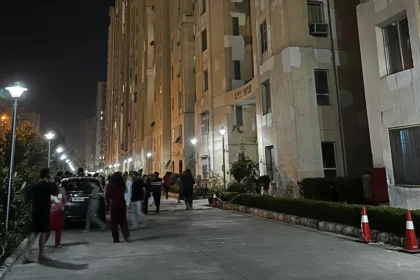
Delhi government accepts responsibility after Janakpuri pit tragedy
The Delhi government has officially taken full responsibility for the tragic death of a young motorcyclist who fell into an open excavation pit in Janakpuri. The accident, which occurred during ongoing sewer construction work, has raised serious concerns about public safety, infrastructure monitoring, and accountability.
Chief minister Rekha Gupta confirmed that departmental inquiries have been initiated and assured that strict action will be taken against anyone found responsible. The incident has also sparked broader discussions about civic infrastructure, governance priorities, and future safety measures in the national capital.
What happened in the Janakpuri accident
A fatal fall into an open construction pit
The accident involved a 25-year-old motorcyclist who reportedly crashed into a pit dug for sewer line work in West Delhi’s Janakpuri area. The excavation had been carried out by the Delhi Jal Board as part of infrastructure development.
Initial reports suggested the pit was deep and lacked adequate safety barricades or warning signs, which may have contributed to the accident. Such situations can be especially dangerous at night or in areas with limited visibility.
The incident quickly drew public attention, with many residents questioning safety protocols at construction sites across the city.
Government response and investigation
Chief minister Rekha Gupta stated clearly that her government is not shifting responsibility elsewhere. According to her, the administration has accepted full accountability and has launched an internal departmental investigation.
She emphasized that if negligence or lapses are identified, those responsible will face strict action. The goal, she said, is not just to investigate the incident but also to prevent similar tragedies in the future.
One year of governance: CM reflects on challenges
A year of learning and policy groundwork
During a recent interview marking the first year of her administration, Rekha Gupta described the past year as a period of learning, policy drafting, and addressing inherited challenges.
She said the government focused on understanding seasonal issues that affect Delhi. Summers highlighted water shortages, the monsoon season brought concerns about waterlogging, and winters once again raised serious air pollution challenges.
According to Gupta, the administration responded to each situation with targeted measures, though she acknowledged that much more work remains.
Infrastructure projects and improvements
The chief minister outlined several infrastructure efforts undertaken over the past year. These include expansion of water pipelines to improve access across the city and extensive drain cleaning operations aimed at reducing flooding risks.
One example cited was the Minto Bridge area, historically known for waterlogging during heavy rains. The government claims steps taken there prevented major flooding during the recent monsoon.
Large-scale desilting work, involving removal of significant quantities of silt from drains, was also highlighted as part of flood prevention efforts.
Focus on coordination and development
Triple engine government approach
Gupta referred to what she described as a triple engine governance model, highlighting coordination between the Delhi government, the central government, and civic agencies.
This coordination, she said, has helped push forward projects such as pollution control initiatives and the rejuvenation of the Yamuna River. Improved cooperation, according to her, is intended to speed up infrastructure development and policy implementation.
Upcoming infrastructure priorities
Looking ahead, the chief minister indicated that the coming year will focus heavily on implementing policies drafted earlier. Infrastructure expansion, improved public services, and stronger accountability mechanisms are expected to be central priorities.
New policies related to electric vehicles and excise regulations are also anticipated, which could influence transportation, environmental sustainability, and revenue generation.
Welfare schemes under review
Mahila Samman scheme scrutiny
One of the government’s key campaign promises, the monthly Mahila Samman financial assistance scheme, is still under review. The administration is examining beneficiary data to ensure broader coverage and proper allocation of funds.
Gupta explained that many welfare schemes historically relied on ration card databases, resulting in the same group repeatedly benefiting while others were excluded. The current review aims to expand eligibility so more eligible citizens can access assistance.
Integration of earlier programs
The government is also restructuring some older welfare schemes. For example, pending claims from the Ladli program are being addressed while integrating it into a new initiative called Lakhpati Bitiya.
Officials say this move is intended to streamline benefits and improve financial support systems for eligible beneficiaries.
Criticism of previous administration
Claims of inherited financial challenges
Rekha Gupta criticized the previous administration, alleging that her government inherited financial liabilities and management issues. She cited losses in public transport services and pending payments under welfare programs as examples.
According to her, a significant portion of the past year was spent clearing outstanding financial obligations and stabilizing governance systems.
Legal cases and political context
When asked about investigations involving the previous government, Gupta noted that these matters are currently being handled by courts. She also remarked that public electoral outcomes have already reflected political accountability.
Such political exchanges continue to shape the broader narrative around governance in Delhi.
Public safety concerns remain central
Construction safety under scrutiny
The Janakpuri incident has intensified public demand for stricter monitoring of construction zones, proper barricading, and visible warning systems. Experts often emphasize that basic safety measures can prevent many accidents.
With urban development accelerating, ensuring safety at excavation and construction sites is becoming increasingly important.
Need for stronger accountability
Clear responsibility among civic agencies, faster response to complaints, and regular inspections can help reduce risks. Public safety advocates stress that infrastructure development must always go hand in hand with safety enforcement.
Budget session and future plans
Policy implementation phase ahead
The chief minister confirmed that preparations for the upcoming budget session are almost complete. While the past year focused largely on policy planning, the government now intends to move toward implementation.
Major infrastructure announcements, new policies, and development initiatives are expected to feature prominently.
Focus on long-term urban development
Future plans are likely to address transportation, environmental concerns, water supply, and economic growth. Authorities aim to balance development with sustainability and public safety.
The Janakpuri accident has highlighted both immediate safety concerns and broader governance challenges in Delhi. By accepting responsibility and initiating investigations, the government has signaled its intention to address the issue seriously.
At the same time, the administration is positioning the coming year as a phase of implementation, infrastructure growth, and improved accountability. Whether these efforts translate into safer public spaces and more efficient governance will remain closely watched by residents.
For now, the focus remains on ensuring that tragedies like the Janakpuri pit accident are not repeated and that urban development proceeds with stronger safeguards.