NCRTC Allocation Reduced in Union Budget 2026-27
The Union Budget 2026-27 has brought a reduced allocation for the National Capital Region Transport Corporation, the agency responsible for implementing the Regional Rapid Transit System across the NCR. As the flagship Delhi-Meerut Namo Bharat corridor moves closer to full completion, the government has cut NCRTC’s budget by around 25 percent.
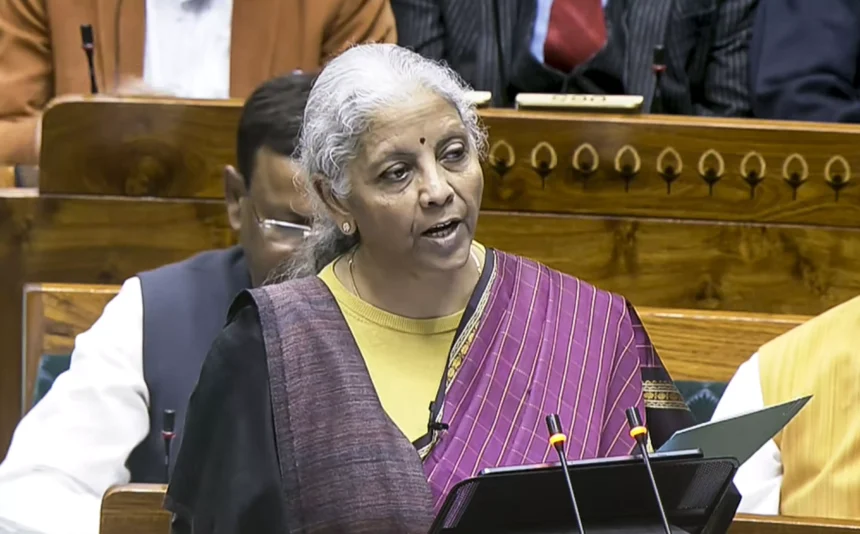
In the budget presented by Finance Minister Nirmala Sitharaman on Sunday, NCRTC was allocated Rs 2,200 crore for the coming financial year. This marks a decline from the Rs 2,918 crore provided in 2025-26.
Officials say the reduction reflects the near completion of major construction work on the Delhi-Meerut corridor, even as preparations continue for future routes.
Breakup of the New Budget Allocation
Revenue and Capital Expenditure Explained
Out of the total Rs 2,200 crore allocated to NCRTC in the Union Budget 2026-27:
- Rs 1,324 crore has been earmarked for revenue expenditure
- Rs 876 crore has been set aside for capital expenditure
Revenue expenditure largely covers operational costs, maintenance, staff expenses, and routine functioning of the system. Capital expenditure, on the other hand, is used for new construction, asset creation, and major infrastructure expansion.
According to NCRTC officials, the current allocation is sufficient to support ongoing operations and also keep groundwork ready for new corridors once they receive formal approval.
Why NCRTC Funding Has Been Reduced
Delhi-Meerut Corridor Nears Completion
The primary reason for the dip in allocation is that work on the Delhi-Meerut Namo Bharat corridor is almost complete.
This 82-kilometre corridor is India’s first Regional Rapid Transit System project and has already entered the operational phase on a large section.
At present:
- A 55-kilometre stretch from New Ashok Nagar in Delhi to Meerut South in Uttar Pradesh is operational
- Trial runs on the remaining sections have been completed successfully
- The full corridor is expected to become operational soon
With most heavy construction work now behind it, the need for large capital outlays has reduced, leading to a lower budgetary requirement.
Spending Patterns in the Current Financial Year
Unspent Capital Funds in 2025-26
Interestingly, the latest allocation for 2026-27 is still higher than what NCRTC is likely to spend in the current financial year.
With only two months left in 2025-26, NCRTC has spent around Rs 2,000 crore so far.
Out of the Rs 2,471 crore sanctioned under the capital expenditure head this year, the agency was able to spend only Rs 1,528 crore. The remaining amount remained unutilised, mainly due to the completion of major construction milestones and slower approvals for new corridors.
This underspending also played a role in the government scaling back the allocation for the next year.
Future RRTS Corridors Await Central Approval
Phase I Projects Still Pending
While the Delhi-Meerut corridor is nearing completion, NCRTC is still waiting for the Centre to approve the remaining two corridors under Phase I of the RRTS project.
These include:
- Delhi to Karnal corridor in Haryana
- A section of the Delhi to Alwar corridor
Officials say both projects are at an advanced stage of consideration, but formal clearance is still awaited. Once sanctioned, construction on these corridors is expected to take at least five to six years.
An NCRTC official said the current budget allocation would help initiate work on new corridors as soon as approvals are granted.
Sarai Kale Khan to Become the Main Hub
All Corridors to Converge at One Station
All three Phase I RRTS corridors have been planned to converge at the Sarai Kale Khan Namo Bharat station in Delhi.
This station is being developed as a major multi-modal transport hub, connecting:
- Namo Bharat RRTS
- Delhi Metro
- Indian Railways
- Inter-state bus terminals
Once all corridors are operational, Sarai Kale Khan is expected to become one of the busiest transit points in the National Capital Region.
Economic Survey Highlights RRTS Benefits
Major Gains in Pollution Control
The 2025-26 Economic Survey of India praised the RRTS project for its environmental and economic benefits.
According to the survey:
- Around 25 lakh vehicle trips have already been avoided since partial operations began
- Nearly 69 lakh kilograms of carbon dioxide emissions have been offset
- NCRTC aims to source 60 percent of its energy from renewable sources in the future
These measures are expected to play a significant role in reducing pollution levels in the NCR, one of the most polluted regions in the country.
Employment and Labour Market Impact
Millions of Mandays Generated
The Economic Survey also highlighted the massive employment potential created by the RRTS project.
During the construction phase between 2019 and 2025:
- Approximately 166 lakh mandays of employment were generated
Once the system becomes fully operational:
- Around 12 lakh mandays of employment are expected to be supported annually
These include direct jobs in operations and maintenance as well as indirect jobs in allied services.
Improved Access to Jobs and Opportunities
Faster Commutes, Bigger Job Markets
One of the biggest advantages of the RRTS system is improved accessibility to jobs.
Early estimates from the Economic Survey suggest:
- Residents of Meerut could access nearly 6.9 to 7.6 lakh jobs within one hour of travel
- Around one lakh jobs would be accessible within an hour from Sarai Kale Khan
By drastically reducing travel time between cities, the RRTS is expected to reshape commuting patterns and expand labour markets across the NCR.
Expansion Plans Beyond Delhi-NCR
Namo Bharat Model for Other Regions
The Economic Survey also noted that the success of the Namo Bharat RRTS has encouraged planners to identify similar corridors across other parts of the country.
Nearly 2,900 kilometres of potential RRTS corridors have been identified in regional clusters such as:
- Bengaluru–Mysuru–Tumakuru–Hosur
- Chennai–Vellore–Villupuram–Chengalpattu
- Hyderabad–Warangal
These corridors are expected to act as engines of regional economic growth by improving connectivity between major cities and smaller towns.
What the Budget Cut Really Means
Not a Setback, Say Officials
While a 25 percent cut in allocation may appear significant at first glance, officials stress that it does not signal a slowdown in the RRTS vision.
Instead, they say the reduced funding reflects:
- Completion of major construction work
- Transition from building to operating mode
- Readiness to shift focus to new corridors once approvals are in place
The coming years are expected to see steady expansion of the Namo Bharat network, both within the NCR and beyond.
The Road Ahead for NCRTC
As India’s first Regional Rapid Transit System moves closer to full operation, NCRTC now stands at a transition point.
With the Delhi-Meerut corridor nearly complete, attention is shifting towards expanding the network, improving service quality, and preparing for future growth. The reduced allocation in Budget 2026-27 reflects this changing phase rather than a loss of momentum.
Once new corridors receive approval, funding requirements are expected to rise again, keeping rapid regional rail at the centre of India’s urban transport strategy.