Delhi’s air quality showed a small improvement on Thursday morning, but pollution is still far from safe levels. While the overall Air Quality Index dropped slightly compared to the previous day, many parts of the city continued to struggle with poor visibility, smog, and unhealthy air.
Here is a simple, clear breakdown of the current air quality situation, what the numbers actually mean, which areas are most affected, and what residents can expect from the weather over the next few days.
Understanding Delhi’s Air Quality Today
The city recorded an overall AQI of 271 at 8 am on Thursday, according to data from the Central Pollution Control Board. This places Delhi firmly in the poor air quality category.
Although this marks a modest improvement from Wednesday, when the AQI crossed 312 and entered the very poor range, experts say pollution levels are still concerning and can affect health, especially for children, elderly people, and those with respiratory issues.
AQI categories explained simply:
201 to 300 – Poor: Air can cause breathing discomfort for many people
301 to 400 – Very Poor: Can trigger respiratory illness with prolonged exposure
Delhi is currently hovering around the lower end of the poor category, but several areas remain in worse condition.
Areas Facing the Worst Pollution
Some neighbourhoods recorded particularly high pollution levels on Thursday morning. Anand Vihar stood out with an AQI of 327, keeping it in the very poor category.
Other severely affected areas included:
Vivek Vihar – 343
Ashok Vihar – 320
Rohini – 322
RK Puram – 314
Dwarka Sector 8 – 328
Patparganj – 307
Bawana – 306
Monitoring data showed that:
18 stations recorded very poor air quality
18 stations recorded poor air quality
Only 3 stations reported moderate air quality
This means most of Delhi is still breathing unhealthy air despite the slight improvement.
Why Smog Is Still Hanging Over Delhi
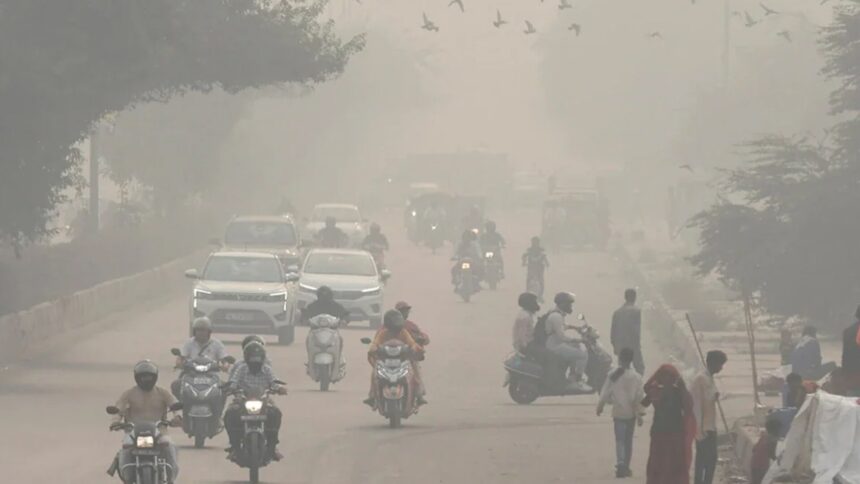
Residents across the city noticed a thin layer of smog during the early morning hours. Reduced visibility was reported in several areas, largely due to a mix of pollution and fog.
Winter conditions often trap pollutants close to the ground. When wind speeds are low and temperatures drop overnight, pollutants cannot disperse easily. This leads to smog formation, which is essentially a combination of smoke, pollutants, and moisture in the air.
Even when AQI numbers improve slightly, visible smog can remain until stronger winds or warmer conditions help clear it.
Weather Conditions May Offer Some Relief
The weather outlook suggests gradual, though limited, relief from pollution. Delhi woke up to a slightly warmer morning on Thursday, with the minimum temperature settling at 10.2 degrees Celsius.
The India Meteorological Department has forecast:
Moderate fog on Thursday
Shallow fog expected on Friday and Saturday
No rainfall warning for now
Rain usually helps clear pollution quickly, but since none is expected soon, improvement will mostly depend on wind movement.
Wind Speeds Could Help Pollution Disperse
One encouraging factor is the forecast of sustained surface winds between 10 and 20 km per hour during the day. These winds can help disperse pollutants slowly, which might lead to gradual air quality improvement.
However, experts caution that this will not result in an immediate clean-air situation. Pollution levels may fluctuate depending on local emissions, temperature changes, and atmospheric conditions.
Temperature Outlook for the Coming Days
Delhi’s maximum temperature is expected to remain between 21 and 23 degrees Celsius. This is close to the seasonal average and indicates relatively stable weather conditions.
Warmer daytime temperatures combined with steady winds may help reduce smog formation, though nighttime fog could still worsen pollution temporarily during early mornings.
Health Impact Residents Should Watch For
Even when AQI improves slightly, poor air quality can still affect health. Common symptoms people may experience include:
Eye irritation
Throat dryness or coughing
Breathing discomfort
Headaches or fatigue
Those with asthma, allergies, or heart conditions should remain particularly cautious. Doctors often advise limiting outdoor activity during high pollution periods, especially in the early morning and late evening.
Simple Precautions People Can Take
While individuals cannot control citywide pollution, a few steps can reduce personal exposure:
Avoid heavy outdoor exercise during peak pollution hours
Keep windows closed during smoggy mornings
Use air purifiers indoors if available
Wear masks designed to filter pollution when stepping outside
Stay hydrated to reduce irritation from polluted air
These measures can help minimize the short-term effects of polluted air.
Why Small Improvements Still Matter
Although Delhi’s AQI remains in the poor category, even slight improvements are significant. They indicate better atmospheric dispersion and can reduce the severity of health risks compared to extremely high pollution days.
Consistent improvements over several days are usually needed before residents feel noticeable relief.
Looking Ahead
Delhi’s air quality situation remains fragile. Weather conditions, local emissions, traffic patterns, and seasonal factors all play a role in determining daily pollution levels.
For now, residents can expect fluctuating AQI readings with occasional foggy mornings and gradual improvement if wind conditions remain favorable.
Staying informed, taking basic precautions, and monitoring daily air quality updates will help residents better manage exposure until cleaner air conditions return.