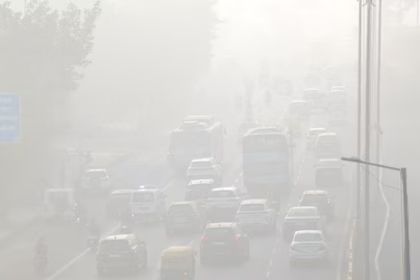
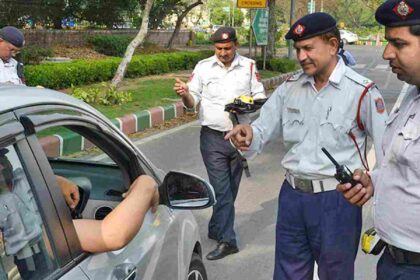
The Supreme Court of India has also been actively taking notice of the deteriorating air pollution situation in the region of Delhi-NCR. In a telling observation on this issue, it has asked authorities to consider another possible solution to this pollution: either shifting or managing toll plazas, decongest traffic, and tighten policies on the basis of Air Quality Index to control pollution emissions in vehicles, which are among the largest sources of this pollution.
Court Highlights Traffic Congestion as Major Pollutant
In hearings regarding air pollution management, it has also been reiterated that traffic congestion around toll booths and border checkpoints causes queues, increases idle time, and hence, emission amounts. The court also mentioned that regardless of the number of pollution-reducing strategies, ground-level performance is subpar, thereby allowing pollution due to congestion to remain unabated.
The judges noted that toll booths positioned near the borders of Delhi contribute to air pollution in the region, especially when a large number of vehicles enter the capital at peak hours daily. The court encouraged the relevant bodies like the National Highways Authority of India to implement changes even at the structural level, for instance by positioning the toll booths far from residential areas or even improving traffic to minimize braking periods.
- AQI-Based Action Must Be Proactive:
The Supreme Court further emphasized that AQI-generated action plans should be proactive rather than reactive. The court added that by the time “severe” or “hazardous” air pollution standards are actually enforced, “public health harm” has been wrought.
This bench pointed out that AQI data should inform policy interventions in the following manner:
Restrictions on traffic during highly polluted days
Regulation of entry of non-essential vehicles
Expanding work from home mandates
Temporary halting of the construction and demolition operations
As stated in the court, these mechanisms must be launched when the first symptoms of decline appear rather than after the pollution peaks.
A Health Emergency, Not Only an Environmental Problem
Labeling Delhi’s pollution a “public health emergency,” the Supreme Court cited figures that associate levels of AQI with respiratory diseases, heart ailments, and a reduced lifespan. “The vulnerable sections, namely children, senior citizens, and patients suffering from comorbidities, are most adversely affected,” it stated.
The court made it clear that the right to pure air is an extension of the right to life. There is a constitutional duty to act effectively in this regard to protect the right to life. Otherwise, there may be administrative negligence.
The Accountabilities of Authorities
One of the key issues envisaged in the court is the absence of accountability on the part of the implementing agencies of the directives regarding the Graded Response Action Plan (GRAP).
The Supreme Court encouraged greater coordination between:
Delhi Government
Central pollution control authorities
Municipal corporations
Traffic police and highway departments
It further recommended auditing of the pollution control efforts on a regular basis and public disclosure of the outcome of any enforcement actions.
Toll Booths Analysis and Long-term Solutions
Though the court understood the importance of toll booths for generating funds and maintaining infrastructure, they ensured the importance of public health comes first. The government has been requested to look into the following technology-based options:
Smoother electronic toll collection
AI-based traffic management systems
Dynamic traffic diversion on high pollution days
Long-term suggestions suggest the promotion of electric cars, enhanced connectivity of public transportation, and a discouragement of the usage of private transportation.
Public Response and Expert Views
The move has been hailed by environmental experts as much needed support to deal with structural sources of pollution. Source close to the matter have opined that easing traffic congestion at toll points could be helpful in alleviating pollution, especially during winter when pollution has been known to stagnate in the region.
The citizens, however, are not easily convinced by this; they give the reason that the court orders in the past had not resulted in any long-term improvement.
The Way Forward
These are important observations by the Supreme Court regarding the pollution crisis in Delhi because they clearly indicate what needs to happen as a matter of extreme urgency and what needs to happen as an enforcement of these necessary actions by relevant and authorative quarters. As the authorities gear up to prepare the required reports regarding the implementation, the next few weeks are set to prove if the pressure exerted by the judiciary brings any change or if another warning gets lost in the smog that fills the air in Delhi.