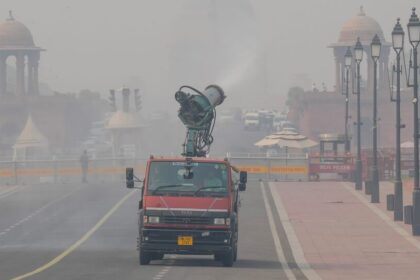
The long-pending task of cleaning the Yamuna river in the capital city of Delhi has finally been given a major boost as high-tech river-cleaning equipment has been introduced in the capital. This move comes at a time when the river’s pollution has been a major cause of concern for the general public in the capital as it becomes worst in the winter season due to less water flow.
The “Shovel Ready” Approach to Infrastructure Spending
The Delhi Government has given its nod to employ modern mechanized machines intended to help remove solid waste, floating material, and sludge from critical areas of the river Yamuna. These machines include garbage skimmers, weed harvesters, sludge evacuation machines, and automatic garbage collectors that can run continuously. The Implementation of technology will help improve efficiency rates, which was estimated to be low in previous manual operations.
Great emphasis has been given to the Najafgarh drain, identified as one of the major contributors of sewage and industrial effluent to the river. The idea is to intercept and prevent this pollution at the level of the drains, before it reaches the main river, and thus decrease pollution at this point.
Functioning of the High-Tech Cleanup Process
These are the ones that are deployed, which are fitted with conveyor belts that pick the waste that is floating. This waste is then directly moved into the collection containers. There are sensors and GPS-enabled tools that monitor the whole activity.
In addition, water quality sensors are being placed in strategic areas to monitor the levels of dissolved oxygen, biochemical oxygen demand, and ammonia. In this way, the effects of the cleanup efforts will be established and measures will be adjusted accordingly.
Addressing a Chronic Pollution Problem
Despite concerted efforts to clean up the river over the years, it remains largely contaminated, since approximately 70 percent of pollution originating from Delhi remains unattended in the form of raw sewerage. It has always been asserted that merely cleaning up the river is not sufficient, and interception and treatment of wastewater are imperative.
The reality that officials are aware of is that the emphasis on technology is in the process of being integrated with other initiatives geared at increasing sewage treatment facilities and improving the existing sewage treatment plants. The objective here is to make sure that the sewage that gets into the river meets the required environmental standards and that the reliance on the mechanical cleaning technology for the cleaning process does not continue.
The Effect of Environmental and Public Health
The polluted form of the Yamuna River proves to be hazardous to both health and the environment. Toxic foam, pungent smell, and apparent pollution in the riverwater have become normal observations on riverbanks, especially in the winter season. Environmental activists claim that pollution in riverwater hampers aquatic life and could lead to groundwater pollution in nearby areas.
It is thought that improved mechanised cleaning and the proper management of sewage can gradually achieve a balance of nature in the river. Cleaned sections of the river can further contribute to achieving biodiversity and an improved urban setting.
The Reaction of the Public and the Expert Community
The hi-tech cleaning campaign has raised some hopeful feelings among environmental groups and communities. There are those who have welcomed the renewed seriousness of the government but emphasized the need for enforced cleanliness rather than relying on advanced technologies for cleaning.
Experts have also noted the importance of coordination among states because the Yamuna River flows through different states before reaching the capital, Delhi, and hence, if the upper section of the river where its pollution originates is not cleansed, then the cleaning exercise in Delhi may prove ineffective.
Future Issues
Although there is the advantage of speed and scale in the machines, there are some challenges involved. These include maintenance and operating costs, as well as how to ensure uninterrupted power supply. There is also a concern about the cleanup exercise potentially becoming symbolic in nature in respect to the sources of pollution.
The authorities have also mentioned that regular auditing and performance evaluation will be carried out to determine their success. Community engagement and awareness campaigns have also been proposed to dissuade the community from dumping their waste into drains and riverbanks.
The Road Forward The technological intervention in the cleanup of the Yamuna River marks a departure from the short-term approach to a more sustainable initiative. This strategy, although it may not produce immediate results, is a clear gesture to make the river cleaner and more sustainable. With the ever-present issue of pollution plaguing the city of Delhi, the future of the cleaning of the famed river Yamauna is being widely anticipated because the possibility of the application of modern technologies there can prove to be the game-changer that turns around the fate of one of the most important natural resources of the city.