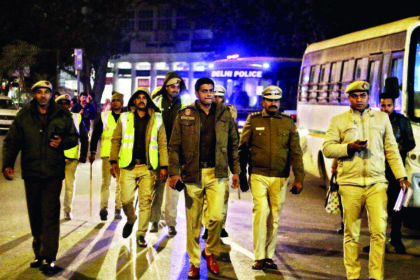
Two important governance initiatives are being pursued in the national capital, reflecting the growing orientation toward smarter, cleaner, and more accountable urban services. First, the Municipal Corporation of Delhi is tightening the noose on illegal dumping of construction‑and‑demolition waste with CCTV surveillance. The Delhi Jal Board, on the other hand, has inked a deal to leverage Artificial Intelligence and “digital twin” technologies in a transformative overhaul of the way water and sewage infrastructure is managed.
Cracking down on C&D waste dumping
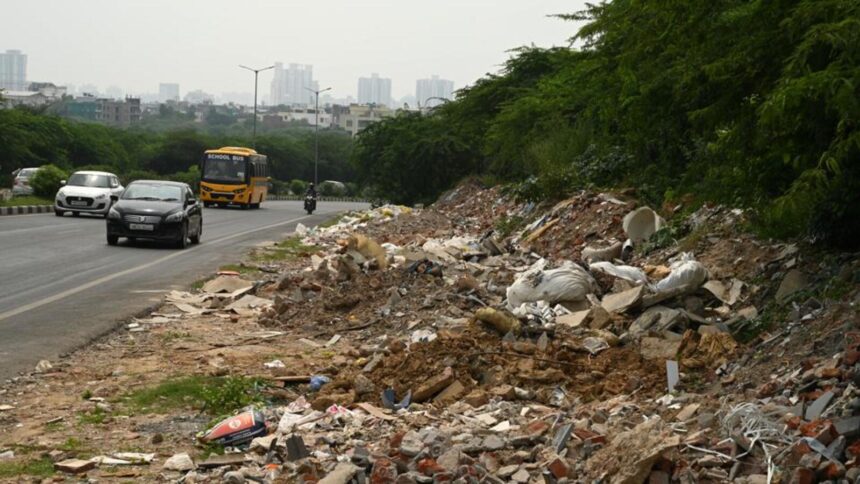
Illegal dumping of C&D waste remains one of the major environmental and public‑health headaches in Delhi. The MCD says it will deploy CCTV cameras at 524 strategic locations in its 12 municipal zones in order to monitor, deter and penalise unauthorized dumping of debris.
The Shahdara South zone has emerged as the biggest beneficiary of this roll‑out, with 113 identified points for camera installation.
Why this initiative matters:
C&D waste is a major contributor to dust, air‑pollution (particularly in the post‑monsoon season), blocked drains and encroachments on public land. It affects the cleanliness of neighbourhoods, the efficacy of storm‑water drains and, eventually, living conditions at ground level.
The surveillance move signals a shift from reactive clean‑ups to proactive monitoring: watching where the debris is dumped, identifying the vehicles/actors involved, and linking them to enforcement actions.
By placing cameras at “hot zones” of dumping, the MCD is essentially creating a layered deterrent – “we’re watching you” – which helps in tracking repeat offenders and builds evidence for fines or prosecutions.
Critical considerations and challenges:
Cameras alone are only part of the chain; detection needs to feed into effective action-fines, removal, prosecution-for the deterrent effect to bite. Unless there is follow-through, visibility without consequence won’t change behavior.
The buy‑in of the public and transparency in data go a long way: locals and RWAs must know which points are being monitored, how dumps will be cleared, and how complaints are handled.
Infrastructure at the collection sites matters: As earlier data from MCD showed, though 158 dumping points were identified in the city, only a subset have been made fully operational.
The “legal dumping” alternative has to be in good shape if the surveillance is going to succeed, so people don’t just shift their illegal dumping elsewhere.
Environmental externalities: Simply stopping dumping is good—but the waste has to be processed or otherwise recycled appropriately. Otherwise, cameras might shrink visible dumping but shift it underground or to other jurisdictions.
AI for water infrastructure: A new frontier in service delivery
While waste surveillance addresses one side of the city’s environmental challenge, the DJB’s latest move brings the other: water and sanitation. On 12–13 November 2025, Delhi government’s water utility signed an MoU with Airawat Research Foundation (ARF) at Indian Institute of Technology Kanpur to deploy AI, digital twins, and satellite‑sensor data across Delhi’s water, sewage, and aquifer management systems.
Real‑time monitoring of supply pipelines, treatment plants, and sewage networks: the capacity for early detection of pressure drops, leaks, or inefficiencies in the system before they become major breakdowns.
AI-powered grievance redressal (citizen complaint handling), plus better revenue/billing systems-so households get correctly billed and are able to track the status of water issues.
Groundwater monitoring and recharge via sensors, bore‑well data, and satellite imagery are critical in a city whose aquifers are under stress.
Pollution control under the Clean Yamuna Mission: Untreated sewage outflows and polluted drains feeding into the Yamuna River will be flagged through AI tools.
Why this is a big deal:
Historically, water services had been reactive: a leak happens – a citizen complains – patch repair. The system should become proactive with AI and digital twins: problemspot → alert → fix.
The citizen experience improves with fewer service disruptions, clearer billing, and better accountability. That helps rebuild trust in public utilities.
The environmental gains include an improved control of leakage, less wastage, less untreated wastewater, healthier river ecosystems, and more sustainable use of groundwater.
Governance upgrade: data-driven models can shift urban water governance from “fire-fighting” to planning and prediction.
Challenges ahead:
Data integrity & integration: The utility must bring data from multiple sources together-sensors, satellites, field staff, and billing systems. Without clean data, AI systems falter.
Ground execution: Technology might raise red flags early, but repairs, maintenance, and infrastructure upgrades still require money, contracting, manpower, and coordination.
Citizen inclusivity: If the system is too high‑tech, the concerns of marginalised areas may be overlooked. Equitable coverage should be considered.
Privacy and Data Governance: The MoU categorically states that ownership of the data vests with DJB and is governed by the Digital Personal Data Protection Act, 2023.
Smarter cities: a coordinated vision The parallel thrusts – CCTV for C&D waste and AI for water infrastructure – represent a larger transition in the urban governance of Delhi: from volume‑based input (just doing stuff) to outcome‑based, monitored, technology‑enabled service delivery. Both initiatives showcase three shared themes: surveillance & monitoring, data-driven action, and citizen accountability. For instance: Monitoring where debris is dumped, tracking offenders, linking to enforcement. Monitor water network health, predict failures, track citizen complaints, and bill for data ingested. Together, when it comes to waste, water, air quality, and infrastructure, the result could be a far smarter city: it will be one in which systems talk to one another, governance is transparent, and performance is measurable.
However, technology remains an enabler, not the full solution. Success would depend on institutional capacity, field delivery, citizen participation, legal enforcement, and sustainable financing. For residents, the next step will be to watch whether the cameras lead to fewer dumps and whether the AI system leads to fewer water issues. Conclusion Delhi’s twin moves-the MCD’s CCTV roll‑out for C&D waste and DJB’s AI partnership for water management-indicate a meaningful pivot. They reflect a city-state willing to embrace surveillance, data, AI, and new governance models toward better environmental outcomes and urban services. If done well, residents will see cleaner streets, fewer unauthorized debris dumps, improved water supply, fewer leaks and a responsiveness that has long been lacking. If not, they run the risk of another layer of digital promise sans delivery on the ground.