Barapullah Drain Gets a Fresh Start With New Greenway Stretch
A long-neglected and polluted stretch of the Barapullah drain in south Delhi is finally seeing a transformation. On Thursday, the Delhi government opened a 200-metre section of the South Delhi Greenway project, offering residents a glimpse of what is planned to become a continuous green public corridor along the drain.
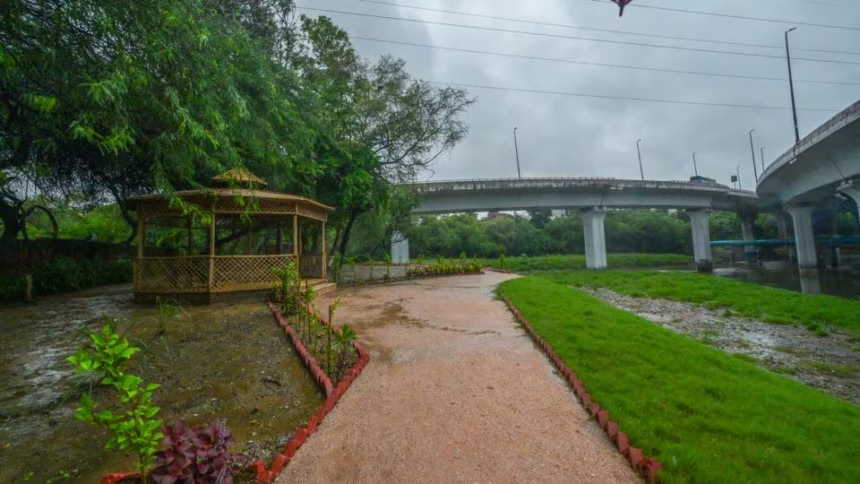
The newly inaugurated stretch includes a pedestrian walkway, landscaped green areas, and a bamboo gazebo, turning what was once an unpleasant, foul-smelling zone into a space for walking, relaxation, and community use.
What Is the Barapullah Greenway Project?
A Vision to Reclaim a Polluted Corridor
The Barapullah Greenway project aims to redevelop the 12.5-kilometre-long Barapullah drain corridor into an ecological, cultural, and recreational passage. For decades, the drain has carried untreated sewage and solid waste, making it one of the most polluted urban drains flowing into the Yamuna.
The project seeks to reverse this damage by integrating green infrastructure, public spaces, and wastewater treatment systems into the redevelopment plan.
First Phase Now Taking Shape
The initial phase of the project covers a 4.5-kilometre stretch of the drain. The 200-metre section inaugurated this week is part of this first phase and marks the first publicly accessible portion of the long-delayed project.
Officials said this opening signals renewed momentum after years of stalled progress.
What the New Stretch Looks Like
Walkways, Greenery, and Public Seating
The newly opened section features a paved walking track running alongside the drain, surrounded by landscaped green areas. A bamboo gazebo has been installed to provide shaded seating, encouraging residents to spend time in the space.
The design focuses on simple, accessible features that can be used by walkers, joggers, and nearby residents seeking open space in a dense urban neighbourhood.
Visible Change on the Ground
Groundwork is now visible beneath the Barapullah Phase-I flyover, where turf, soil beds, and fenced planting zones have been laid. These areas were earlier filled with waste and stagnant water, making them unusable and hazardous.
Residents in nearby areas have already begun using some sections informally, especially during morning and evening hours.
Cleaning the Drain While Building Green Spaces
Wastewater Treatment Built Into the Design
One of the key aspects of the project is its focus on improving water quality. Decentralised wastewater treatment units are being installed near residential outfalls to prevent untreated sewage from entering the drain and eventually the Yamuna.
Officials said the project includes constructed wetlands, biosorption beds, and stormwater management systems designed to naturally treat wastewater before it flows downstream.
A Step Towards Reducing Pollution in the Yamuna
The Barapullah drain originates near Lajpat Nagar and flows eastward into the Yamuna. Over the years, it has become a major source of pollution for the river.
By intercepting sewage, improving drainage, and reducing solid waste dumping, the greenway project aims to cut pollution at the source rather than relying only on downstream cleanup efforts.
A Long-Delayed Project Gets a Push
Conceptualised Nearly Two Decades Ago
The Barapullah Greenway was originally conceptualised between 2004 and 2007, with a masterplan developed in consultation with multiple civic and planning agencies. The idea was to combine environmental restoration with public access and cultural spaces.
Although approvals were secured over the years, the project remained largely on paper due to coordination challenges, shifting priorities, and delays in implementation.
Encroachment Removal Paved the Way
The current phase began after an encroachment removal drive along parts of the drain corridor. Officials said clearing illegal structures and waste dumping sites was a necessary first step before any redevelopment could begin.
The revived push has brought long-pending plans back into action.
Connecting Heritage, Nature, and Communities
A Non-Motorised Green Corridor
The larger masterplan envisions a continuous non-motorised corridor for walking and cycling. Once completed, the greenway is expected to link several major heritage and cultural landmarks across south and central Delhi.
These include Qutub Minar, Hauz Khas, Humayun’s Tomb, the Lotus Temple, and Purana Qila.
Passing Through Urban Villages
The alignment also passes through several urban villages and residential neighbourhoods, offering residents access to green spaces often missing in densely populated areas.
Landscape plazas and small public spaces are planned near archaeological sites, with interpretive signage and cultural installations proposed in later phases to highlight the history of the areas along the route.
Challenges Still Remain
Waste Dumping and Illegal Connections
Despite progress, officials acknowledge that challenges persist. Solid waste dumping, illegal sewer connections, and fresh encroachments remain issues in some stretches of the drain.
These problems not only slow construction but also threaten the long-term success of the project if not addressed consistently.
Maintenance Will Be Key
Urban planners and environmental experts point out that maintaining the greenway will be just as important as building it. Without regular upkeep, drainage management, and enforcement against dumping, the corridor could fall back into neglect.
Local Response and Early Impact
Residents Begin Using the Space
Near the Nizamuddin segment, graded walkways and planted areas are now visible, and residents have already started accessing the space for walking and leisure.
For many locals, this marks the first time the drain area feels safe and usable rather than something to avoid.
A Shift in How the Drain Is Seen
The project is slowly changing how people perceive the Barapullah drain. Instead of being seen only as a source of pollution, it is beginning to be viewed as a potential community asset.
What Comes Next
Expansion Across Remaining Stretches
Further phases of the project will expand the greenway across the remaining stretches of the drain. Officials said work will continue in segments, depending on land availability, encroachment clearance, and funding.
The aim is to eventually create a continuous, uninterrupted corridor from the drain’s origin to where it meets the Yamuna.
A Test Case for Urban Renewal
If successful, the Barapullah Greenway could become a model for transforming polluted urban drains into functional green spaces in other parts of Delhi and beyond.
It represents a shift toward integrating environmental repair, public health, and urban design rather than treating these issues separately.
A Small Stretch, A Bigger Promise
The opening of a 200-metre stretch may seem modest, but it carries symbolic weight. It signals the revival of a long-stalled vision and offers a tangible example of how neglected urban infrastructure can be reimagined.
For now, the greenway stands as a promise of cleaner water, greener spaces, and a better relationship between the city and its natural systems.