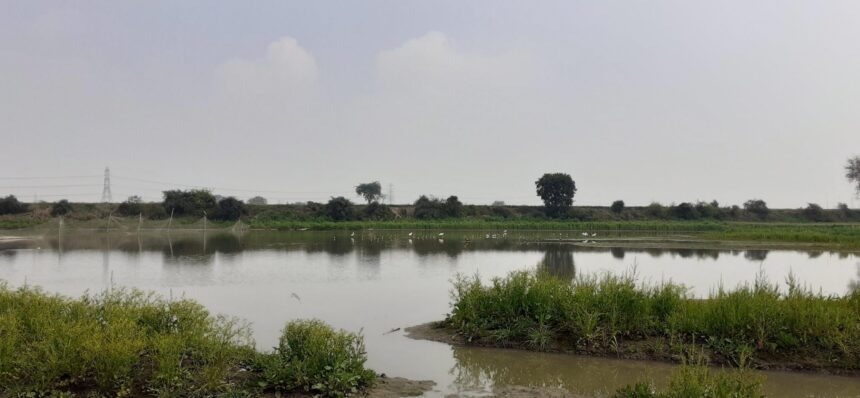
A massive ecological restoration is underway along the Yamuna riverbanks in Delhi as the Delhi Development Authority rapidly pushes forward with a project to restore wetlands along the eastern bank of the river. This is part of a bigger plan to rejuvenate the floodplains of the Yamuna, increase biodiversity, and make the city more resilient against flooding and environmental degradation.
Preliminary work is underway for Yamuna Vanasthali Phase I, a 43-acre tract between Shastri Park Red Light and Pushta No. 1. The DDA is spending around ₹1.9 crore to develop it and will finish the work in about six months. The project thus plans for ecosystem restoration of the area through removal of invasive vegetation, ground preparation, and planting of native trees and grasses. The main species that are being planted involve Amaltas, Sheesham, Arjun, and wild sugarcane, which are quite compatible with riverine conditions and seasonal flooding.
The importance of this restoration goes beyond aesthetics. Wetlands improve water quality, help recharge groundwater, control floods, and form habitats for different species of birds, fish, and amphibians. By reestablishing wetlands along the Yamuna, the DDA is creating natural buffers that absorb excess water during the monsoon, reducing the risk of flooding in nearby areas. The restored floodplain will support urban biodiversity, attracting migratory birds and promoting ecological balance in the city.
While the restoration of Vanasthali Phase I area encompasses 43 acres, it is part of a larger plan to restore more than 600 acres along the eastern Yamuna floodplain. The DDA plans to turn as much as 150 meters from the river into wetland zones, interspersed with greenways, cycle tracks, and public trails. This balances the need for conservation with that of recreation and education, enabling the citizens to interact with nature without compromising ecological integrity.
The project has legal and institutional support. The National Green Tribunal has ordered the DDA to remove the encroachments and ensure that floodplain restoration is accorded priority. This initiative also falls in line with the environmental policies of Delhi aimed at restoring natural habitats and preventing the pollution and degradation of the Yamuna. Eleven eco-restoration projects are currently underway along the river covering nearly 1,600 hectares, including areas like Asita East, Amrut Biodiversity Park, and other segments of Yamuna Vanasthali.
An important part of the DDA’s approach has been to adopt a nature-first kind of urban planning. Unlike previous strategies for development, which were heavily reliant on concrete embankments and paved surfaces, this plan emphasizes greenery. Thus, this model of restoration uses multilayered vegetation, unpaved trails, solar-powered lighting, and signage to protect sensitive zones. Fencing and monitoring of the wetlands are also in full gear to avoid encroachments and ensure their long-term sustainability.
Community involvement and maintenance are integral parts of the project. Planting will be followed by a three-month period of supervised monitoring to allow vegetation to get properly established, with a one-year maintenance contract. Public access is diligently planned: while core zones of wetland are protected, walkways, viewing platforms, and nature trails will enable citizens to enjoy the revitalized landscape both for recreation and education.
Yet, despite this optimism, challenges persist. Sewage inflow control, prevention of illegal encroachments, and assured long-term funding are yet to be effectively tackled. Besides, the Delhi Pollution Control Committee has suggested diversion of several drains and enhancement in sewage treatment capacity to sustain ecological health of the river and wetlands. Restoration of the Yamuna wetland is one key step towards ushering in much-needed environmental rectitude while promoting ecologically balanced urban growth in Delhi. The DDA thus initiated an ecological restoration based on legal enforcement and community involvement, aiming to make the riverfront resilient, biodiverse, and aesthetically appealing.
If completed according to plan, these wetlands will not only clean up the city’s environmental profile but also set examples of riverfront restoration in urban areas all over India. In all, the restoration of the Yamuna wetlands is a transformative project drawing together ecological science, urban planning, and civic engagement. As Delhi continues to grow, initiatives like this ensure the city balances its urban growth with environmental sustainability, affording its residents cleaner water, greener spaces, and a revitalized connection to one of India’s most iconic rivers.