The Delhi Government has directed all schools to conduct classes for students up to Class V online due to the deteriorating levels of air pollution in the national capital. The move comes against the backdrop of high Air Quality Index levels being maintained in the severe range in various areas of Delhi. The severe levels have triggered emergency actions.
Pollution has reached alarming levels
In recent days, the air quality in Delhi has been steadily decreasing due to several reasons, such as car emissions, dust from construction activities, industrial emissions, and also due to conditions like low wind speeds and temperature inversions. The heavy smog has decreased the visibility of the environment and also led to health-related problems due to lung ailments among the residents.
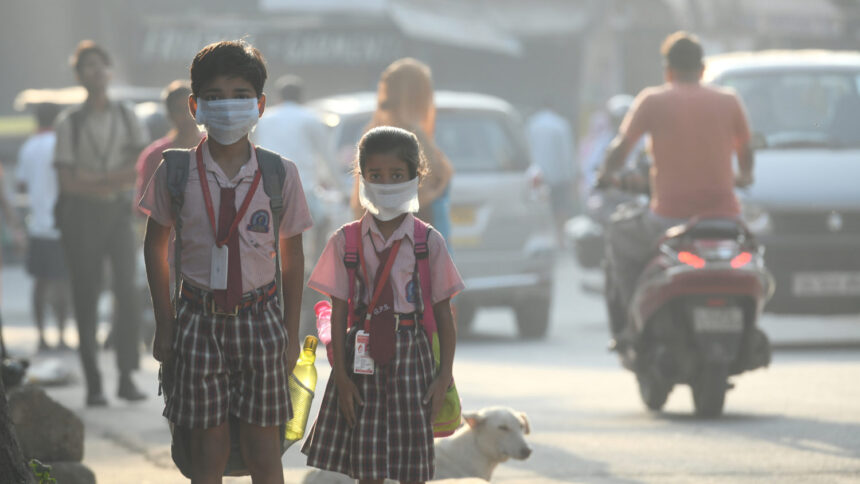
As per the official monitoring data, the AQI levels exceeded the critical level in more areas, and at some stations, the air quality touched 450, which is extremely dangerous. Health experts say this situation is even more harmful to kids, whose lungs are developing and are easily affected.
The Government’s Decision on Protecting Children
In light of this, the Delhi government has now decided that physical classes for younger students be temporarily suspended, and online education begin until such a time that air quality improves. This will be applicable for government, aided, and private schools.
According to education authorities, the action was meant to be preventive in order to shield the children from the toxic air. This is because young scholars usually get ample opportunities to go outside throughout their school hours. Such opportunities include assembly sessions, break times, and going back and forth from school.
It has been clarified that classes of upper grades may proceed under limited conditions, which include prohibiting outdoor programs. Institutions have been advised to closely monitor air quality updates.
Health Concerns Take Center Stage
Doctors in Delhi have recorded an increase in cases involving coughing, wheezing, irritation in the eyes, asthma attacks, and throat infections, especially among children and senior citizens.
“Pediatricians welcome this decision since prolonged exposure to this kind of air poses serious effects on their lungs and immunity levels,” said a pediatrician in support of the move.
Health experts are also recommending parents not expose their children too much outdoors, or if they must go outside, that they wear masks. In addition, they must maintain clean air indoors.
Effects on Parents and Schools
Though the move has been welcomed for health reasons, there are logistical problems associated with it as well. This is especially the case for working parents, who need to manage their work commitments with online learning, particularly if they have young children to take care of as well. Schools, on the other hand, are expected to go into online learning again, with memories of the pandemic and previous pollution-related shutdowns not fading away.
The school administration reports that they are ready but point out that engaging in online learning for an extended period of time is really not that great for young learners. The teachers add that even though online learning sessions can continue learning throughout, interaction is very important at a young age.
Larger Crisis Management and Reliefeptal
The shift to online learning is just one of the broader range of emergency actions that have been fulfilled under the parameters of the protocols on pollution control. Such actions include those that ban construction work, avoid going out when not necessary, and have an intensified use of transport.
However, environment experts have said that these steps are of a reactive type and that there is a need to adopt preventions like clean transport infrastructure, effective use of trash, minimized use of fossil fuels, and more coordination regarding nearby countries regarding burnt straw stubbles.
A Recurring Winter Challenge The annual struggle in the city of Delhi against winter pollution has become a regular public health concern. Even after the formulation of various action plans and court orders, the city is regularly facing severe air episodes, thus bothering the normal routine, including educational services. The current move of shifting students to e-learning seems to reinforce the pressing requirement for effective long-term strategies. With the authorities tracking the levels of pollution every day, the waiting continues for parents and schools to get further notice on when to resume physical classes. Meanwhile, the emphasis remains on safeguarding the well-being of children while the city battles one of its most severe pollution concerns.