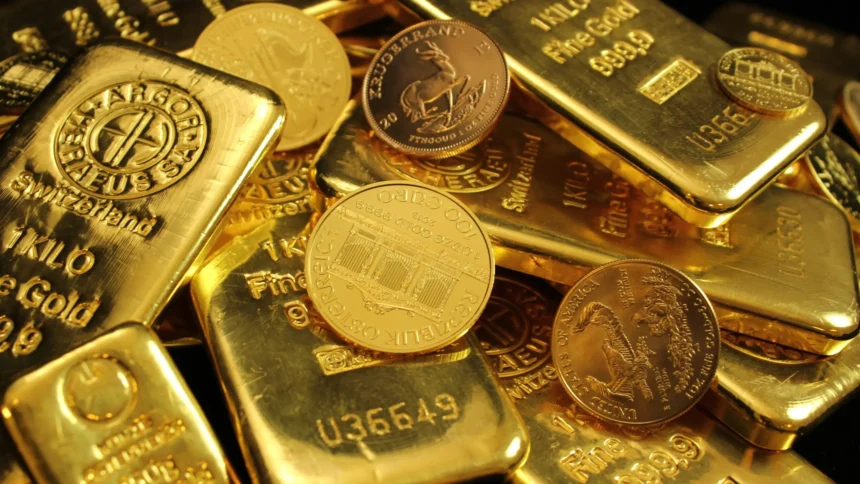
Gold has always been considered a favorite in Indian households, not only for its use as an ornament but also for being a symbol of wealth, security, and tradition. On November 13, 2025, the gold market in Delhi saw a significant increase that caught investors’, traders’, and consumers’ eyes. The price for 10 grams of 22‑carat gold increased to ₹1,17,300, which is an increase of around ₹2,100 from the previous day. 24‑carat, being the purest quality, reached ₹1,27,950 per 10 grams, increasing by about ₹2,290. This rise has sparked discussions on the forces behind gold prices and their impact on the masses.
Factors Driving the Price Surge
Many factors contribute to gold price volatility, and the rise in its prices in Delhi is no exception. As seen worldwide, gold is a hedge against economic uncertainties, inflation, and currency fluctuations. According to analysts, recent signals of monetary tightening in major economies, besides rising geopolitical tensions in Asia and Europe, have made investors move to the relative safety of gold.
Domestically, the Indian rupee has shown signs of depreciation against the US dollar over the last couple of weeks. As gold is traded internationally in dollars, a weak rupee makes the metal more expensive for Indian consumers. Besides, with the beginning of the festive season, as Diwali and the wedding season are at their peak, it automatically propels demand in Delhi and northern India, pushing prices further upwards.
Implications for Investors
For investors, the recent spike in gold rates has its share of opportunities and challenges. For the long-term investor who has considered gold as a hedge, this may finally be a vindication of his investment strategy. Gold-backed exchange-traded funds, sovereign gold bonds, and physical holding of gold could, therefore, appreciate in value and act to hedge against inflation and volatility in the market.
Short-term traders must, however, be wary. While the momentum might bring in returns over the short term, sharp corrections are not unheard of in commodity markets and even more so in precious metals. According to experts, international cues like US Federal Reserve policy, crude oil price, and global political scenarios need to be tracked diligently as all these have a direct bearing on gold prices in India.
Impact on Consumers and Festive Purchases
The more immediate effect of rising gold prices is felt by the everyday consumer. Weddings and festivals, most other cultural occasions in Delhi, include substantial purchases of gold. Families that were thinking of buying jewelry may now find themselves having to pay a higher price for bridal sets or traditional ornaments. Inquiries have increased in Delhi retailers, though many customers are buying in smaller quantities or deferring purchases in the hope of a possible stabilization in prices.
Despite the rise, gold continues to be a favorite investment avenue for Indian households, partly for its liquidity and intrinsic value. Jewelers say prices fluctuate, but gold continues to be a safer and more tangible asset compared to other volatile investment options.
Silver and Other Precious Metals
The rise in the price of gold has also impacted the silver market: on the same day, silver was trading at around ₹1,72,000 a kilogram in Delhi. Similar to gold, silver prices depend on global industrial demand, currency exchange rates, and investor interest. While nowhere near as popular for investment in India as gold, silver is still widely used for minor jewelry items and in various industries.
Market Outlook
Analysts foresee that gold prices in Delhi might continue to remain high for the immediate future due to persistent global uncertainties and demand pressures at the domestic level, though seasonal fluctuations and intervention by policy authorities could reduce the rise in prices. It is recommended that buyers consult reliable sources from the market and track official rates prior to making purchases.
Analysts also say long-term investors continue to view gold as an inflation hedge and as a stable store of value. For households, balancing immediate festive needs with strategic investment considerations can help optimize the benefits accruing from gold ownership. Conclusion The surge in gold rates in Delhi on 13 November 2025 reflects a combination of global economic trends, domestic demand, and cultural influences. Investors may see opportunity in this, but for consumers, it translates into more expensive purchases of traditional items. Gold, however, continues to symbolize security, wealth, and cultural heritage in India. For residents of Delhi, keeping themselves informed about market fluctuations and purchasing at the right time will be of essence to handle this phase of price increase effectively.