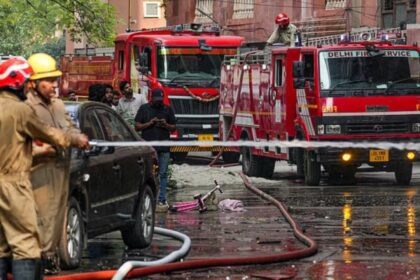
New Delhi, November 8, 2025 — The tragic deaths of three IAS aspirants in a flooded basement at a Delhi coaching centre earlier this year have prompted the Lieutenant Governor’s office to approve disciplinary proceedings against two senior officials of the Delhi Fire Services. The decision comes after an investigation revealed negligence and concealment of critical safety violations, highlighting serious lapses in regulatory oversight and building compliance in the national capital.
The incident occurred when heavy water accumulation in the basement of a well-known coaching institute in Rajendra Nagar trapped several students. Despite attempts to alert the authorities and initiate rescue operations, three students lost their lives, which led to outrage and demands for accountability. Inquiries afterwards pointed to failure in following fire and safety regulations, besides delayed response by DFS personnel and poor coordination with the coaching centre’s management.
According to the officials, the two DFS officials were facing allegations of not ensuring proper inspection and not reporting known hazards in the building. “The preliminary investigation indicates gross negligence in discharging official duties. The disciplinary action approved by the Lt. Governor will now proceed as per the established rules,” said a spokesperson from the Lieutenant Governor’s office.
The coaching centre caters to several hundred IAS aspirants every year and has undergone safety audits in the past. However, investigators say that safety recommendations were either inadequately implemented or ignored. Experts suggest that inadequate monitoring coupled with lapses in enforcement contributed to creating conditions that led to the tragedy.
Families of the victims expressed grief and frustration over the delay in accountability. “Our children went to the coaching centre with dreams of serving the nation. Their lives were cut short due to negligence that could have been prevented,” said one parent during a press interaction. Advocacy groups for student safety also demanded a comprehensive review of all coaching centres in Delhi to prevent similar incidents in the future.
The DFS, tasked with implementing the laws on fire safety and inspections, had to face criticism from civic authorities and the media for the way the case was handled. Sources close to DFS said standard operating procedures for emergency preparedness were not properly followed or the risk of basement flooding was not taken seriously, despite warnings during the just-passed monsoon season.
Legal experts say that the disciplinary proceedings, which have been approved, only mark the beginning of a lengthy process, and suspension, fines, or other administrative action could be taken against the officials based on the inquiry report. This incident has brought into question the accountability of private educational institutions and the enforcement of safety norms in metropolitan cities like Delhi.
Safety analysts argue that this incident shows that stricter building compliance, better emergency preparedness, and rigorous monitoring from municipal and state authorities are needed. In fact, with a number of coaching centres and educational institutes running in high-density areas, failure to enforce safety regulations can be catastrophic.
In light of the tragedy, the Delhi government has ordered a scrutiny of the safety mechanism followed in every IAS coaching institute in the city. This includes a compulsory risk assessment, the installation of emergency drainage and alarm systems, and training staff for prompt evacuation in case of an emergency. These steps need to be put in place so that students and staff are not exposed to such preventable hazards in future.
The flooding of the coaching centre that led to the death of several students has also triggered a larger debate on urban safety and governance. Critics say these incidents point to fundamental flaws in regulatory enforcement, inadequate staffing, and poor coordination between different civic bodies. Digital tracking of building inspections, stringent mechanisms for penalties, and accountability reports to the public are some steps experts suggest to prevent recurrence of such accidents. Approving disciplinary proceedings offers some closure for the families of the victims, but there’s profound pain from the loss.
The incident serves as a sober warning to maintain safety measures, vigilance, and accountability in city educational institutions. The authorities and the public are following the process of action carefully, hoping it will act as a deterrent and a lesson for more compliance throughout the city. The tragic flood deaths at the Delhi IAS coaching centre underline the severity of consequences due to safety oversight negligence. While disciplinary proceedings are in the offing against responsible DFS officials, along with enhanced scrutiny of urban educational institutions, the tragedy may catalyze long-overdue reforms to safeguard students and avert such slips in the future.