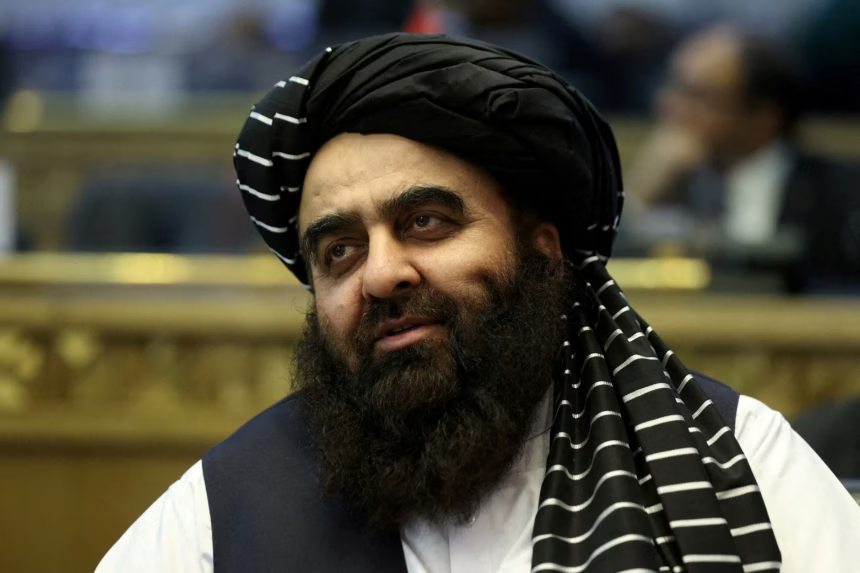
Afghanistan’s Taliban-nominated Foreign Minister, Amir Khan Muttaqi, landed in New Delhi on October 9, 2025, for a six-day visit, which represents the first official journey of a top-ranking Taliban leader to India since the group retook power in 2021. The visit indicates the turning point of regional diplomacy, a response to changing geopolitical trends and India’s new policy towards its western neighbor.
Diplomatic Engagement Amidst Complex Relations
Muttaqi’s visit was made possible by a temporary lifting of the United Nations Security Council travel ban, which enabled him to have diplomatic talks overseas.
The Indian Ministry of External Affairs gave a “warm welcome” to the Afghan Foreign Minister, showing an openness to talk despite issues with the Taliban rule.
This visit highlights India’s complicated approach to Afghanistan. Although New Delhi has not formally accepted the Taliban administration, it has re-established a small diplomatic mission in Kabul to coordinate humanitarian aid and commerce, indicating tentative outreach.
Agenda and Strategic Interests
Muttaqi is also expected to hold meetings with Indian External Affairs Minister Subrahmanyam Jaishankar and National Security Adviser Ajit Doval while in residence. Topics for discussion are expected to range from political coordination to trade relations, especially in the areas of dry fruit exports, healthcare cooperation, consular services, and port access.
The Taliban’s overtures towards India are part of a larger design to secure international legitimacy and economic aid. Russia is the sole nation that has gone on record in formally recognizing the Taliban government, but Afghanistan’s leadership is working to diversify diplomatic ties with a view to stabilizing the country and bringing about economic development.
Regional Implications and Pakistan’s Perspective
Muttaqi’s visit is bound to be watched closely by neighboring Pakistan, which has a complicated and frequently contentious relationship with both India and the Taliban. The Taliban’s promises to India that Afghan territory will not be used for terrorism against India might be interpreted as an effort to appease regional fears and establish trust. Navbharat Times
But concerns of Pakistan persist, especially about the strategic implications of India’s relations with the Taliban. The changing dynamics may determine the balance of power in the region and impact Pakistan’s foreign policy.
Symbolic Gestures and Cultural Diplomacy
Aside from political and economic talks, Muttaqi’s schedule features stops at cultural attractions like the Taj Mahal and Darul Uloom Deoband seminary. These are symbolic visits to reinforce cultural bonds and show a common Islamic heritage.
The Taliban’s decision to talk to Indian institutions such as the Deoband seminary is a move to reach out to India’s Muslim population and pose as more moderate in the eyes of the world.
Amir Khan Muttaqi’s trip to India is a noteworthy event in Afghanistan’s international affairs and India’s foreign policy. Although the issues continue, the rapprochement between the two countries could provide an opportunity for a more stable and collaborative regional landscape. As the two nations work through this complicated relationship, the results of the visit will likely shape future diplomatic relations and regional geopolitics.