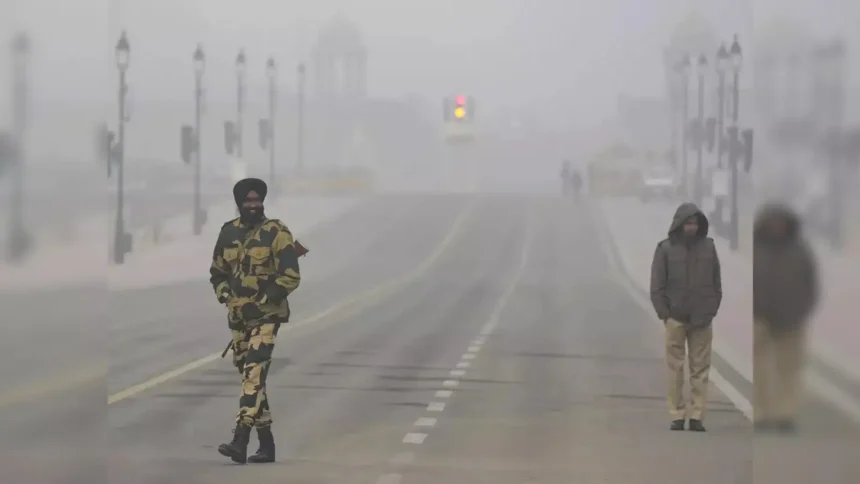
Delhi woke up shivering on Thursday as the city recorded its coldest night in three years. With the minimum temperature dropping to a biting 2.9 degrees Celsius, icy winds, dense fog and poor air quality combined to make life difficult for residents across the capital.
For many Delhiites, this winter morning felt harsher than usual — not just because of the cold, but also due to widespread travel delays and a thick blanket of fog that reduced visibility to dangerously low levels.
Delhi Records Coldest Night Since 2023
According to data from the India Meteorological Department, Thursday’s minimum temperature of 2.9 degrees Celsius was the lowest recorded in Delhi in the last three years.
How Rare Is This Cold?
The last time the city experienced a colder night was on January 18, 2023, when temperatures dipped to 2.6 degrees Celsius. This week’s chill brings Delhi very close to that mark.
The temperature on Thursday was:
- 4.5 degrees below the seasonal average
- Lower than Wednesday’s minimum of 3.8 degrees
- Almost identical to Tuesday’s 3 degrees
This steady drop over consecutive days pushed the city deeper into coldwave conditions.
Coldwave Conditions Enter Fifth Day
Delhi has now been under coldwave conditions for five straight days, making this one of the more prolonged cold spells in recent winters.
What Counts as a Coldwave?
The IMD defines a coldwave as:
- Minimum temperature below 10 degrees Celsius and at least 4.5 degrees below normal, or
- An actual minimum temperature of 4 degrees Celsius or lower
With Thursday’s temperature plunging to 2.9 degrees, Delhi clearly met both criteria.
Palam Shivers at 2.3°C, Lowest in 20 Years
While Safdarjung remains Delhi’s official weather station, other parts of the city recorded even lower temperatures.
Palam’s Record-Breaking Chill
Palam recorded a minimum temperature of 2.3 degrees Celsius on Thursday:
- Five degrees below normal
- Lowest January temperature at Palam in 20 years
The last time Palam recorded such extreme cold was in January 2006, when temperatures fell to 0.3 degrees Celsius.
Temperatures Across Delhi: Area-Wise Lows
Different weather stations across the capital recorded varying minimum temperatures:
- Ayanagar: 2.7 degrees Celsius
- Lodhi Road: 3.4 degrees Celsius
- Ridge area: 4.5 degrees Celsius
According to IMD officials, multiple stations across the city logged coldwave conditions, and isolated pockets may continue to experience similar conditions on Friday.
Why Is Delhi So Cold Right Now?
Meteorologists say a combination of weather factors is responsible for this intense chill.
Icy Northwestern Winds
Cold northwesterly winds have been blowing over Delhi for nearly 10 days. These winds originate from colder regions and are known to sharply reduce temperatures across north India.
Dense Fog Trapping the Cold
Thick fog during the early morning hours has prevented heat from escaping, keeping night-time temperatures extremely low.
Dry Air and Clear Skies
Dry air conditions allow the ground to lose heat rapidly at night, leading to colder mornings.
Dense Fog Hits Visibility Hard
Fog was one of the biggest challenges on Thursday morning, severely affecting visibility across Delhi.
Visibility Levels Recorded
- Palam: As low as 50 metres between 6 am and 9 am
- Safdarjung: Around 100 metres at 6 am
According to IMD classifications:
- Shallow fog: Visibility between 500 and 1,000 metres
- Moderate fog: 200 to 500 metres
- Dense fog: 50 to 200 metres
- Very dense fog: Below 50 metres
Several parts of Delhi hovered dangerously close to very dense fog levels.
Flights and Trains Disrupted by Fog
The poor visibility had a clear impact on travel, especially during the morning rush hours.
Flight Delays at Delhi Airport
Data from flight tracking services showed:
- Over 500 flights delayed at Indira Gandhi International Airport
- Average departure delay of around 32 minutes
Passengers faced long waiting times, missed connections and rescheduled departures.
Train Services Also Affected
According to Northern Railways:
- More than 50 trains were running late
- Delays ranged from minor to several hours
Winter fog continues to be one of the biggest challenges for transport in north India.
Air Quality Remains Very Poor
As if the cold and fog were not enough, Delhi’s air quality stayed firmly in the very poor category.
Latest AQI Readings
- AQI at 4 pm on Thursday: 343
- AQI at 4 pm on Wednesday: 353
This marked the third very poor air quality day in recent days.
What This Means for Health
Very poor air quality can cause:
- Breathing discomfort
- Eye and throat irritation
- Worsening of asthma and heart conditions
Experts advise limiting outdoor activity, especially during early mornings and late evenings.
Worse Air Quality Ahead?
Forecasts from the Centre’s Air Quality Early Warning System suggest that air quality could deteriorate further.
AQI Forecast
- January 16–17: Very poor
- January 18: Severe
A severe AQI category means even healthy individuals may experience respiratory issues.
When Will Delhi Get Relief From the Cold?
There is some good news for those tired of the biting cold.
Gradual Rise in Temperatures Expected
The IMD has issued a yellow alert for Friday, predicting:
- Minimum temperatures rising to 4–6 degrees Celsius on Friday
- Further rise to 5–7 degrees on Saturday
- 6–8 degrees expected by Sunday
This gradual warming will bring some relief, especially during early mornings.
Role of Western Disturbance
A western disturbance is expected to play a key role in changing weather conditions.
What Is Happening Weather-Wise?
- A western disturbance began affecting the Himalayan region from January 15
- Fresh snowfall is likely in the hills
- Wind direction over Delhi is expected to change from northwesterly to easterly
Easterly winds are generally milder and bring moisture, which helps reduce extreme cold.
Another, more active western disturbance may bring light rain to the plains around January 22 or 23.
How Cold Has Delhi Been Historically?
While this week’s temperatures are harsh, Delhi has seen even colder winters in the past.
Record Low Temperatures
- Safdarjung’s all-time January low: -0.6 degrees Celsius on January 16, 1935
- Palam’s all-time low: -2.2 degrees Celsius on January 11, 1967
Compared to those extremes, this winter remains severe but not record-breaking.
How Residents Are Coping
Across the city, people have been seen layering up with heavy jackets, scarves and gloves. Homeless shelters reported increased footfall, and night shelters extended services due to the coldwave.
Authorities have urged residents to:
- Stay indoors during early morning hours
- Protect elderly and children from exposure
- Avoid outdoor exercise during peak pollution hours
What to Expect Over the Weekend
While Friday morning may still feel harsh in some pockets, the overall trend points toward gradual improvement.
Weekend Outlook
- Slightly warmer mornings
- Reduced coldwave intensity
- Continued fog in early hours
- Air quality still a concern
Residents are advised to remain cautious, especially those with health conditions.
Final Word
Delhi’s coldest night in three years has served as a reminder of how unforgiving north Indian winters can be. With temperatures dropping to 2.9 degrees Celsius, dense fog disrupting daily life and air quality remaining poor, the past few days have tested the city’s resilience.
Relief, however, appears to be on the way. As temperatures slowly rise over the weekend and winds shift direction, Delhi can expect less biting mornings — even if the fog and pollution take a little longer to clear.
Until then, staying warm, staying safe and planning travel carefully remain the best advice for the capital’s residents.