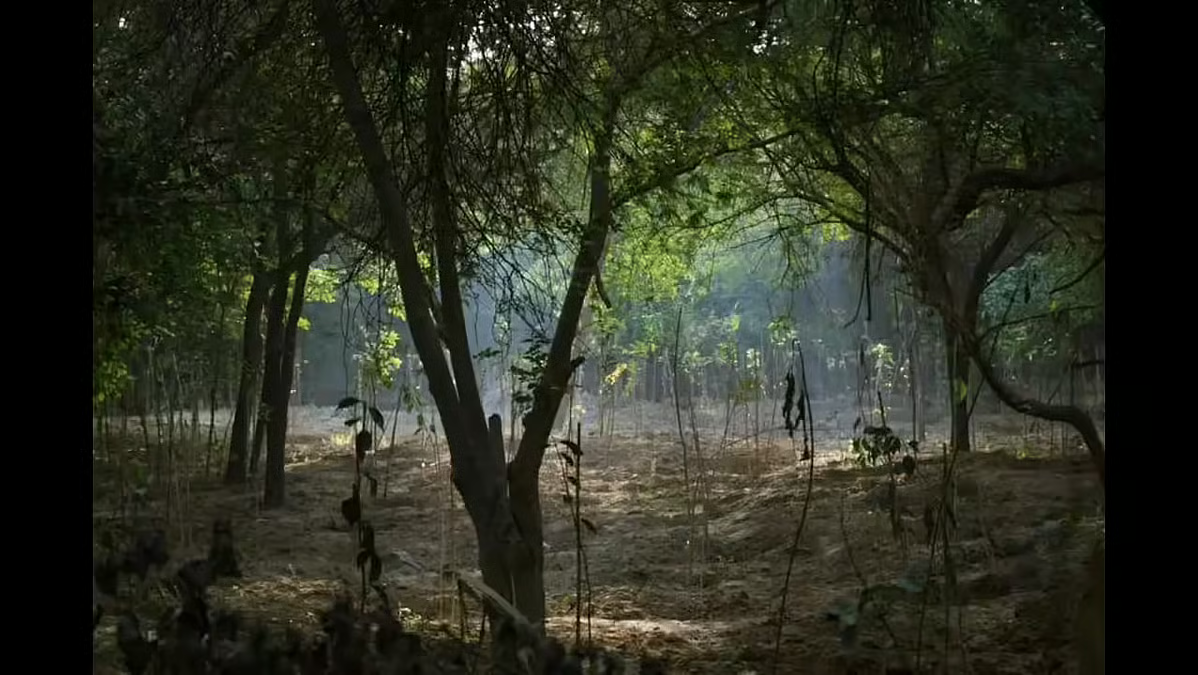
Two new city forests are coming up at the opposite ends of the national capital as Delhi prepares to take a giant leap towards environmental restoration and sustainable urban living. Announced by government authorities, the move has been envisioned to boost the green cover, improve air quality, and give the residents some accessible natural spaces as part of the rising pollution and climatic stress.
The proposed city forests come up at Kharkhari Jatmal in southwest Delhi and Mukhmelpur in north Delhi-both sites being strategically chosen to strike a balance on green infrastructure across the mega city. According to officials, the move is part of a larger ecological vision aimed at transforming underutilized or degraded land into thriving urban forests that can serve as Delhi’s lungs.
Addressing the Environmental Crisis in Delhi
Delhi usually figures in the top rank of the list of the most polluted cities of the world, especially during the winter month, when air quality often deteriorates to hazardous levels. Emissions from vehicles, construction dust, industrial pollution, and crop-residue burning in the neighboring states create the crisis. Although policy responses of temporary relief have been done, such as restrictions on vehicle movements or bans on construction, experts have reiterated long-term solutions based on nature.
For this, urban forests are being considered a strong tool increasingly. The dense plantations absorb carbon dioxide, filter the particulate matter, reduce the surface temperature, and increase oxygen levels. As environmental planners point out, a well-designed city forest has the potential to reduce the local temperature and improve microclimates at significantly higher levels, thus enabling both ecological and public health benefits.
What the City Forests Will Look Like
The two new forests will be plantation following the Miyawaki method, already in use at several places across Delhi. Native species are planted in very close proximity and can grow into forests that become self-sustaining, dense, and fast-growing in mere years. Such a forest grows ten times faster compared to conventional plantations and would require least maintenance once the initial growth years are covered.
According to the officers engaged in the planning, hundreds of species of native trees and shrubs will be planted for biodiversity support, joining birds, insects, and small mammals. They may also develop some walking trails, natural seating areas, and basic amenities so that residents can easily access the green spaces without disturbing the ecological balance.
The Expansion of Green Delhi
The new city forests will contribute to Delhi’s growing network of urban green spaces, already comprising biodiversity parks, city forests, and rejuvenated wetlands. In the last few years, several big-ticket green projects have been executed across the capital, which reflects the growing policy focus on environmental resilience.
The authorities point out that the equitable distribution of green spaces across various zones becomes crucial. North and southwest Delhi have seen rapid urbanization, shrinking open land and raising heat stress. The new forests are expected to partly offset the pressures and form much-needed breathing spaces for the surrounding neighborhoods.
Community and Economic Impact
Besides the environmental benefits, city forests are considered social assets. Availability of greenery has been related to better mental health, reduced levels of stress, and higher levels of physical activity. Urban planners believe that these forests will enhance the quality of life for nearby residents, particularly children and senior citizens.
There is also an economic aspect. Greener communities tend to enjoy increased livability and desirability. While the primary motive remains ecological restoration, officials say such plans are indirectly promoting urban well-being and sustainable development.
Challenges and the Way Forward
But experts remain cautious, saying that the success of city forests depends on how well the initiatives are carried out and protected in the long term. Encroachment and waste dumping, including general lack of maintenance, have affected similar projects in the past. For that, strict monitoring, community participation, and legal protection will be required for the forest areas.
Environmental organizations have welcomed the announcement, but officials of some groups emphasize that city forests should complement, not replace, broader pollution-control measures. Reduction of emission at sources, improving public transport, and enforcing laws on environment protection remain equally important. A Greener Vision for the Capital Two new forests in the city herald a fresh impetus to render Delhi resilient, more livable, and ecologically poised. In a climate of growing ecological challenges and increasing population, such endeavors on greenery could determine the course for the future of India’s capital. If everything falls into place, those forests may stand as eternal reminders of Delhi’s conscientious effort to balance urban growth with ecological sensitivity.