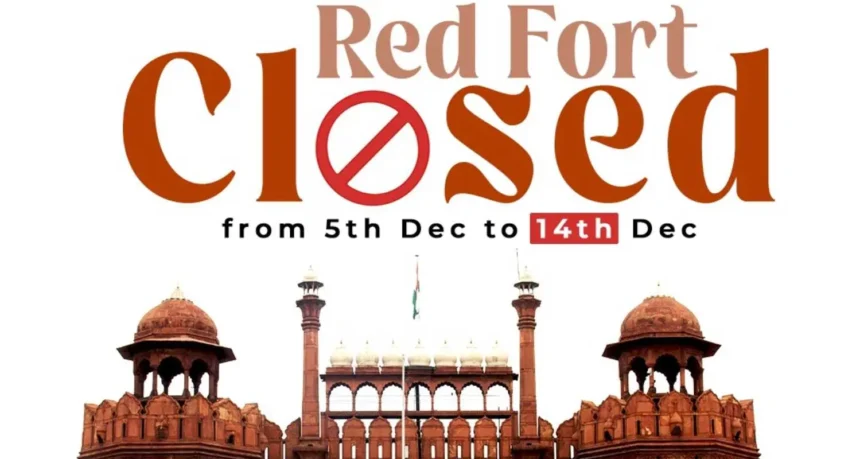
The iconic Red Fort in Delhi is one of India’s most-visited heritage monuments and will not be open to visitors from 5 December to 14 December 2025. The monument is closing temporarily to get ready for the prestigious hosting of the 20th Session of the Intergovernmental Committee for the Safeguarding of the Intangible Cultural Heritage, organized by UNESCO. This is a moment of importance for India, given that it is the country’s first time hosting this high-profile session on cultural heritage, and Red Fort has been chosen as the main venue because of its historical and symbolic importance.
The UNESCO committee meeting, scheduled from 8 to 13 December, will bring together international delegates, cultural experts, scholars, policymakers, and representatives from UNESCO member nations. The event covers discussions on worldwide cultural traditions, preservation strategies, and policy frameworks relating to intangible cultural heritage-traditions, rituals, crafts, performing arts, and knowledge systems that form the backbone of cultural identity. India, with its wide repository of living traditions, has been increasingly recognized for its efforts in safeguarding cultural heritage and is the best fit as this year’s host.
Authorities maintain that the management of ASI, the monument’s guardian agency, has ordered the closure as part of security and preparatory arrangements. The holding of an international conference within the complex of the fort involves a lot of preparations, such as creating controlled zones for meetings, strengthening security protocols, and preparing infrastructure to match international event standards. The administration has also coordinated closely with Delhi Police, SPG units, and the Ministry of Culture to ensure smooth execution of the event.
The Red Fort, built by Mughal emperor Shah Jahan in the 17th century, is a UNESCO World Heritage Site and a symbol of India’s architectural grandeur. With its sprawling courtyards, halls, and gardens, it is not only one of the most frequented tourists’ spots but also a meaningfully historical venue to host global cultural dialogues. Since the event focuses heavily on safeguarding intangible heritage, hosting it at a monument that itself represents centuries of cultural evolution reinforces the message of preservation and continuity.
However, for tourists, the closure has come at a time when tourism activity usually increases because of the pleasant winter season in Delhi. Visitors from different parts of India and overseas who were planning to visit the monument during the first fortnight of December will have to reschedule their plans. Already, travel agencies and tourism platforms have issued advisories for visitors to plan alternative sightseeing options such as Humayun’s Tomb, Qutub Minar, India Gate, Old Delhi markets, and various museums around the capital. Authorities have advised travelers to keep an eye on official government notifications in case dates change due to event-related requirements.
According to the Ministry of Culture, hosting a UNESCO intangible heritage session will be a matter of national pride, especially since India has continued to push for more global recognition for its cultural assets. Over the last few years, UNESCO’s Intangible Cultural Heritage list has added several Indian traditions, such as yoga, Kumbh Mela, Vedic chanting, Durga Puja, Koodiyattam theatre, and the craft of Kashmir papier-mâché. The session will be an opportunity for India to push for consideration of more cultural elements on the list.
Reactions were divided among the local vendors and tourist-dependent businesses in the vicinity of the Red Fort. While some acknowledged the importance of the event and its potential to bring international attention to Indian heritage, others noted that the temporary closure will affect footfall and earnings, especially in peak tourist season. However, authorities are optimistic that the visibility created by the event will translate into increased tourism flows and cultural engagement over the long term. The Red Fort will be reopened to the public on 15 December 2025, unless additional security protocols extend the closure. At the time of reopening, facilities and upgraded sections may be improved inside the complex, as ASI generally makes use of such opportunities to conduct maintenance and restoration work. The fact that India is hosting the session of UNESCO’s intangible heritage is not only a diplomatic or cultural milestone but also underlines the responsibility of this country to preserve its living traditions. The meet at Red Fort, a historical monument, assumes significance when global cultural representatives come together to underline the protection of heritage, tangible or intangible, for future generations.