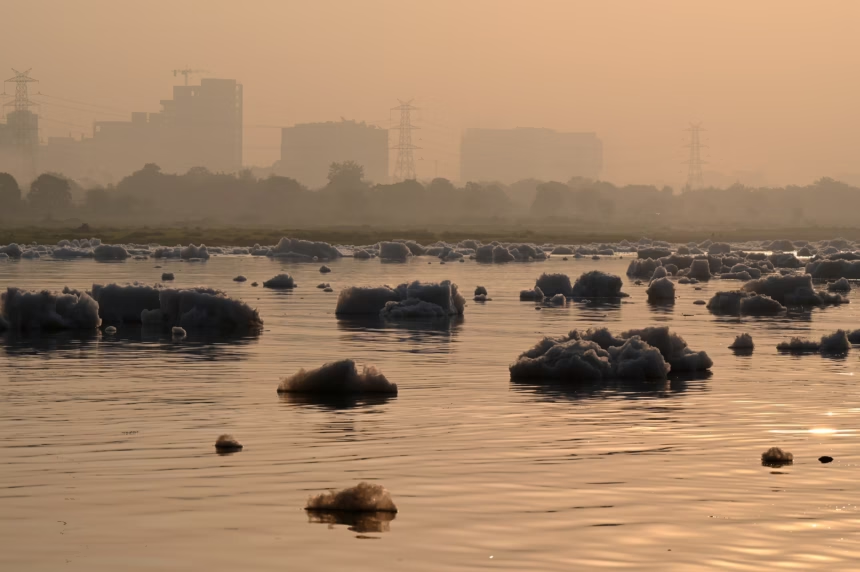
Delhi’s Water Supply Hit as Pollution Levels Rise in Yamuna
Large parts of Delhi are facing disrupted water supply after dangerously high levels of ammonia were detected in the Yamuna River near Wazirabad. The sudden spike in pollution has forced the Delhi Jal Board (DJB) to cut back operations at two of the city’s most critical water treatment plants, leading to low pressure and in some areas, complete disruption of water supply.
Officials confirmed on Wednesday that the problem began upstream of the Wazirabad pond, where raw water is drawn for treatment. The situation has once again highlighted Delhi’s dependence on the Yamuna and the recurring challenges caused by industrial pollution.
What Caused the Water Disruption
Ammonia Levels Cross Safe Limits
According to senior DJB officials, ammonia levels in the raw water at Wazirabad crossed 3 parts per million (ppm) on Wednesday morning. This is nearly three times higher than the maximum level that the treatment plants can safely handle.
DJB’s water treatment plants are designed to treat ammonia levels of up to 0.9 ppm. Anything beyond this limit becomes difficult to neutralise safely. Treating water with such high ammonia levels requires excessive use of chlorine, which can lead to the formation of toxic compounds known as chloramines.
To avoid health risks, the DJB had no choice but to reduce operations at the affected plants.
Water Treatment Plants Operating at Reduced Capacity
Wazirabad and Chandrawal Most Affected
The high pollution levels have directly impacted the Wazirabad and Chandrawal water treatment plants. These two facilities draw water from the Yamuna through the Wazirabad pond and supply treated drinking water to large parts of north, central, and south Delhi.
Officials said that production at both plants has been cut by 25 to 50 percent. As a result, residents in several areas are experiencing low water pressure, irregular supply, or complete outages.
In a statement, the Delhi Jal Board urged residents to use water carefully until the situation improves. The board also assured citizens that water tankers would be made available on request through the DJB helpline.
Areas Facing Water Shortage
North, Central, and South Delhi Impacted
The supply disruption has affected a wide range of localities across the city.
Areas likely to be impacted under the Wazirabad water treatment plant include Defence Colony, Majnu Ka Tila, ISBT, NDMC areas, ITO, Hans Bhawan, LNJP Hospital, CGO Complex, Rajghat, Ramleela Ground, Delhi Gate, Subhash Park, Gulabi Bagh, Timar Pur, Punjabi Bagh, Azadpur, Shalimar Bagh, Wazirpur, Lawrence Road, and Model Town.
Several parts of south Delhi are also affected, including Moolchand, South Extension, Greater Kailash, cantonment zones, and surrounding areas.
Under the Chandrawal water treatment plant, areas such as NDMC regions, Karol Bagh, Jhandewalan, Hindu Rao, Civil Lines, Patel Nagar, Rajendra Nagar, and Shadipur are facing supply issues.
Residents Feel the Impact on the Ground
Low Pressure Turns Into No Water
Residents across north Delhi reported sharp drops in water pressure, with some areas receiving no water at all.
Ashok Bhasin, president of the North Delhi Residents’ Welfare Association, said that complaints have poured in from multiple neighbourhoods. Areas like Subzi Mandi and Ghantaghar reported zero water supply, while residents in Subhash Nagar and Raja Garden faced similar issues.
He added that many households rely on 1,000-litre storage tanks, which helps delay the impact. However, for drinking water, residents have already started depending on water cans.
Emergency Measures by Delhi Jal Board
Water Diversion Creates New Challenges
To reduce the concentration of pollutants in the Yamuna, the DJB has begun diverting raw water from the Munak canal towards the Wazirabad pond. This dilution process helps lower ammonia levels, allowing treatment plants to gradually restore operations.
However, this diversion has created shortages at other treatment plants that depend on the Munak canal, further complicating the city’s water management during the crisis.
A Long-Standing Problem Without a Permanent Fix
Repeated Pollution Spikes Over the Years
This is not the first time Delhi has faced water supply disruptions due to ammonia pollution in the Yamuna. Similar incidents have occurred multiple times over the past several years, especially during the winter months when river flow is low.
Residents’ groups and experts have repeatedly pointed out that while temporary solutions are implemented during each crisis, long-term fixes remain unaddressed.
Ashok Bhasin noted that despite changes in governments over the years, key solutions such as upgrading treatment plants to handle higher pollution levels and increasing buffer water storage have not been fully implemented.
The Delhi-Haryana Dispute Over Yamuna Pollution
Who Is Responsible for the Ammonia?
The issue of high ammonia levels has been a long-standing point of contention between Delhi and Haryana. The Delhi Jal Board has consistently blamed industrial pollution flowing into the Yamuna from upstream areas in Haryana.
According to DJB officials, pollutants such as ammonia-based chemicals, dyes, and chlorides enter the river from the Panipat industrial dye drain. The board has also pointed to Sonepat, where two canals carrying freshwater and industrial waste run side by side, separated only by a thin sand barrier that is prone to leakage.
On the other hand, Haryana authorities have repeatedly denied the presence of leaking pollution sources in their industrial areas and have rejected claims of untreated waste entering the river.
Health and Environmental Concerns
Why High Ammonia Is Dangerous
Ammonia in drinking water is not just a technical problem. High levels can pose health risks and also affect the taste and smell of water. While treatment plants are designed to remove limited amounts, excessive ammonia makes safe treatment difficult.
Experts warn that relying on chlorine to neutralise high ammonia levels can produce harmful by-products, which is why reducing plant capacity becomes necessary during such spikes.
What Residents Can Do for Now
Coping With the Shortage
Until the pollution levels in the Yamuna return to manageable limits, residents are advised to use water sparingly. DJB has assured that water tankers will be available on demand, especially in areas facing complete disruption.
Citizens are also encouraged to store water safely, avoid wastage, and stay updated through official DJB announcements.
Final Thoughts
The latest disruption in Delhi’s water supply once again exposes the fragile state of the city’s dependence on the Yamuna. While emergency measures can manage short-term crises, the repeated ammonia spikes underline the urgent need for long-term solutions.
Stronger pollution control upstream, modernised treatment plants, better coordination between states, and increased water storage capacity are essential if Delhi is to avoid facing the same crisis year after year. Until then, residents remain at the mercy of a polluted river and temporary fixes that offer little lasting relief.