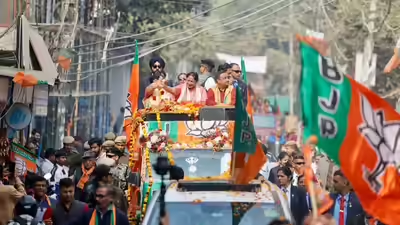
The Bharatiya Janata Party has posted a resounding victory in the Municipal Corporation of Delhi by-elections, winning 7 out of the 12 seats that went to polls this week. Results announced on Wednesday strengthened the party’s foothold in the capital’s civic administration, giving it fresh momentum ahead of future political contests.
These by-elections were held in various wards that fell vacant due to resignation, disqualification, and death of sitting councillors. The contest drew widespread attention as it served as a key indicator of public sentiment in Delhi’s local governance landscape – especially amid rising civic concerns related to pollution, sanitation, and urban infrastructure.
BJP Celebrates Major Gains
The BJP, already wielding significant influence in the municipal structure in Delhi, was pleased. Party leaders said the victory reflected public approval of civic work undertaken by them and their pledge for bettering services in urban areas.
Addressing the media after the results, a senior BJP leader said, “The people of Delhi have once again shown trust in our work. Our councillors have been dedicated to improving cleanliness, waste management, and local infrastructure. These results motivate us to work harder for the city .”
The party won seats in both the urban and semi-urban wards, indicating broad-based support. In a number of cases, victory came by quite small margins, indicating highly competitive races across the city.
AAP Manages 3 Wins, Congress and Left Open Account
The by-election results gave the Aam Aadmi Party 3 seats, showing that there are still pockets of support in their strongholds. AAP leaders said the outcome was not entirely unexpected, given the relatively small number of wards up for election and the heavy presence of the BJP in the municipal system.
One AAP spokesperson said, “These results do not reflect the larger mood of Delhi. We continue to have strong support in areas where governance reforms in education, health, and electricity have been widely appreciated.” The party, however, acknowledged that it faces an uphill task in regaining its strong position in local-level elections where civic issues often override larger policy successes.
The result has brought one seat each for Congress and Left parties, in a notable outcome. Though numerically small, these victories have given both the groups a reason to rejoice as they continue to search for political revival in the capital.
Close Fights and Narrow Margins
Several wards saw razor-thin contest results. In some cases, the winning candidates secured victory by fewer than 200 votes, reflecting intense campaigning and strong voter mobilization by all major parties.
One ward saw a winning margin of 148, while most of the losing candidates demanded recounts, alleging irregularities in the process. However, election authorities said the counting was transparent and followed all guidelines.
Political analysts view the close margins as a sign of the deeply competitive political environment in Delhi’s civic elections, where voters are highly sensitive to hyperlocal issues relating to garbage collection, waterlogging, streetlight maintenance, and neighbourhood hygiene.
Civic Issues at the Forefront
These by-elections were held amidst growing public discontent over Delhi’s recurring civic issues, especially in the wake of deteriorating air quality and mounting waste management problems. Residents across several neighbourhoods have complained about delayed garbage collection, pothole-filled roads, and inadequate sewage maintenance.
The BJP is seen to have performed strongly, reflecting the expectation of the electorate for better and more accountable civic governance. Many voters said they had given priority to basic services over ideological or national political issues while casting their votes.
“We want someone who can fix drainage and garbage in our area. That is what matters to us every day,” said a resident of Karol Bagh while voting for the BJP. In other wards too, this refrain was heard.
What the Results Mean for Delhi’s Politics
Results of the by-elections are expected to have a bearing on the political dynamics within MCD and, quite possibly, on future political strategies at the state level. With 7 seats added to its tally, BJP has reinforced its position and the narrative of being the most reliable force in handling Delhi’s municipal responsibilities. For the AAP, mixed results might give cause for reassessment of their civic governance strategy. For Congress and Left parties, their single-seat victories are small but encouraging steps toward re-establishing political relevance in the capital city. As Delhi heads into a period of heated political activity leading up to bigger elections, results of the by-elections have come out as a critical reminder of how local governance continues to play a decisive role in shaping voter preferences and party fortunes.