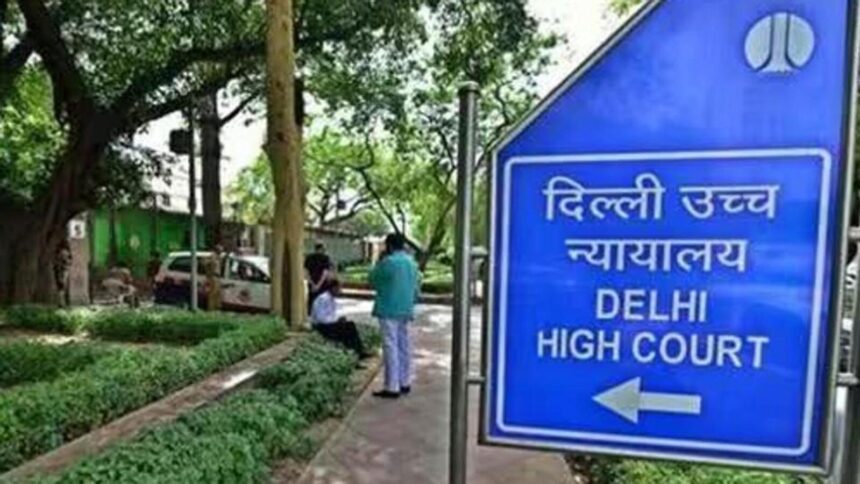
The Delhi High Court has refused to entertain a petition demanding the creation of a committee to monitor the Red Fort blast trial and ensure its completion within six months. The court made it clear that judicial supervision cannot be triggered merely because a petitioner fears delays—especially when the trial has not even begun.
This hearing comes in the backdrop of the devastating November 10 explosion in the capital, one of the deadliest attacks in recent years, which killed at least 12 people and involved an improvised explosive device hidden in a stolen vehicle. With the case newly transferred to the National Investigation Agency (NIA), the high court’s stance highlights where judicial intervention begins and ends.
Why the Petition Was Filed
The petition was submitted by former MLA Pankaj Pushkar. His primary argument was based on past experience: the 2000 Red Fort blast case, he pointed out, took nearly seven years to be concluded at the trial court level. Given this history, he argued that a similar delay might occur in the current investigation.
To avoid such delays, Pushkar sought a high-powered monitoring committee to oversee the progress of the investigation and trial and push for completion within six months.
Centre’s Response: Trial Will Follow NIA Framework
The Centre, represented by additional solicitor general Chetan Sharma, strongly opposed the petition. They clarified that the case has already been handed over to the NIA. Since the investigation now falls under the protocols of the Unlawful Activities (Prevention) Act, the Centre argued the petition was unnecessary and premature.
The submission emphasized that the investigative and legal framework under the NIA is structured, monitored and equipped to handle sensitive terrorism-related cases. There was no reason, the Centre argued, to assume delay before proceedings had even started.
What the Delhi High Court Said
A bench of chief justice DK Upadhyay and justice Tushar Rao Gedela minced no words in dismissing the plea.
Trial Hasn’t Started, So Where Is the Delay?
The court’s central argument was straightforward: there is no delay to correct because the trial has not begun.
The judges questioned the basis of the petition, asking why the court should step in before any actual hindrance has occurred. They stressed that judicial monitoring becomes relevant only when substantial delay is evident and is demonstrably harming the rights of the accused or victims.
A “Good Piece of Essay,” Not a Legal Case
Possibly the most striking moment was the bench’s critique of the petition’s drafting. The judges remarked that the petition “reads like a good piece of essay,” and not a proper legal writ. This comment underscored their view that the plea had no substantial grounds or legal merit.
Court Declines Any Direction
The bench categorically stated that it was not inclined to issue any directive regarding the investigation or trial. The judges noted that courts cannot be expected to monitor trials from the very beginning and that doing so would set an unsustainable precedent.
Court Suggests Withdrawing the Petition
As the hearing progressed, the court asked the petitioner’s counsel whether the plea should be dismissed through a detailed judgment or be withdrawn. Realizing the court’s position, the counsel opted to withdraw the petition. The withdrawal was allowed.
This effectively closed the matter, with the high court refusing to entertain supervisory oversight at this early stage.
The November 10 Blast: A Deadly Attack
The explosion at the center of the discussion occurred on November 10, when an improvised explosive device was detonated inside a stolen vehicle. The blast tore through the area, claiming at least 12 lives and injuring many others.
The attack was one of the most severe incidents in Delhi in recent years, prompting swift action by investigative agencies and intense public scrutiny. The gravity of the crime is also why the NIA was eventually tasked with handling the case.
Why the Court’s Decision Matters
Maintaining Judicial Boundaries
Courts often walk a tightrope between supervising justice and overstepping into executive functions. The Delhi HC’s refusal sends a message that judicial monitoring cannot be demanded simply because of fear-based assumptions.
No Intervention Before Trial Begins
The court reaffirmed that intervention is justified only when prolonged delays are evident. In this case, since the trial hadn’t begun, no such delay existed.
Ensuring Fairness in Terror-Related Cases
By allowing the NIA to proceed under existing frameworks, the court is ensuring that the case moves forward through established legal mechanisms designed for terror investigations.
Public and Legal Reactions
Legal observers have noted that the Delhi High Court’s remarks reflect longstanding principles of judicial restraint. Trial monitoring committees are rare and generally reserved for exceptional circumstances where delays are factual and proven.
Public reactions, especially from those following terrorism-related cases closely, have been mixed. While some appreciate the emphasis on proper legal procedures, others worry that complex cases often do face delays and that oversight could help keep the process on track.
However, the court emphasized that hypothetical fears cannot form the basis of judicial intervention.
The Delhi High Court’s dismissal of the plea to monitor the Red Fort blast trial underscores a critical aspect of the Indian judicial system: oversight must be grounded in actual delay, not in apprehension. With the case now under the NIA’s control and the investigation still in early stages, the court made it clear that there is no justification to pre-emptively establish a monitoring committee.
As the investigation unfolds, the progress of the trial will depend on the established legal processes under the Unlawful Activities (Prevention) Act. For now, the court’s decision draws a firm line between judicial caution and judicial overreach.