India Opens Centre of Excellence for Power Sector Regulation at IIT Delhi
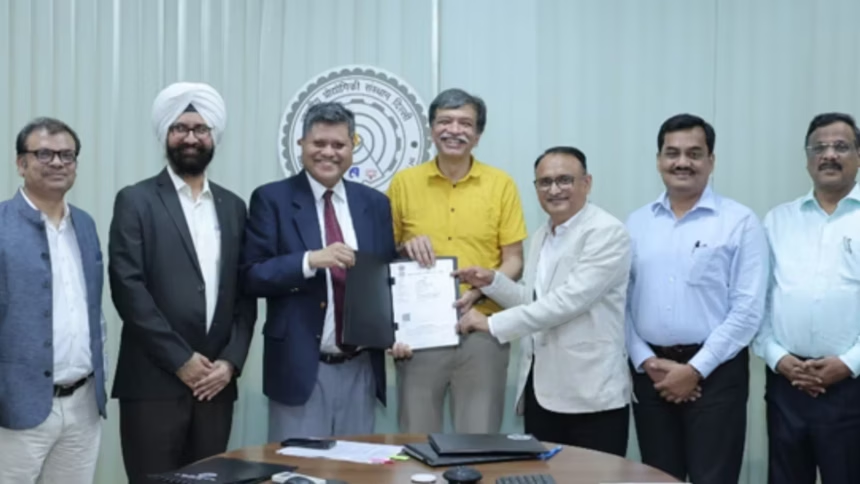
Union Power Minister Manohar Lal inaugurated a new Centre of Excellence (CoE) for Regulatory Affairs in the Power Sector at IIT Delhi on Tuesday. The initiative aims to strengthen India’s ability to manage the rapidly changing electricity landscape as the country moves towards cleaner, more efficient, and more competitive energy systems.
The CoE is a collaboration between IIT Delhi, the Central Electricity Regulatory Commission (CERC), and Grid Controller of India Ltd. (Grid India). It is designed to serve as a national hub for research, policy guidance, and training on power sector regulation.
Why the Centre of Excellence Matters
India’s electricity sector is undergoing a major transformation. The integration of renewable energy, increasing electricity demand, and the push for digitalisation have created new challenges for regulators and operators. The CoE aims to provide solutions that balance affordability, sustainability, and efficiency—what experts call the power sector trilemma.
By combining academic research, regulatory oversight, and operational expertise, the CoE seeks to make decision-making in the electricity sector more informed, forward-looking, and evidence-based.
Key Goals of the CoE
Research and Policy Support
The Centre will conduct research on critical areas such as:
- Market design and electricity trading
- Grid operations and system reliability
- Energy transition and decarbonisation
- Energy storage solutions and demand response
- Green hydrogen development
- Digitalisation and technology integration
This research will provide regulators and policymakers with the data and insights needed to craft effective rules and policies.
Capacity Building
The CoE will also focus on training professionals in the power sector, from regulators to distribution utility managers. By improving institutional capacity, the Centre will help ensure that India’s electricity sector can handle the technical, regulatory, and operational challenges of the future.
Knowledge Sharing and Advisory
Serving as a hub for collaboration, the CoE will advise regulators, utilities, and other stakeholders on policy, market operations, and regulatory issues. This guidance will ensure that decisions are based on data, analysis, and long-term thinking rather than short-term pressures.
Statements from Key Leaders
Manohar Lal, Union Power Minister
Inaugurating the Centre, Manohar Lal emphasized the importance of strong regulation in India’s transition to clean energy. He highlighted the need for regulations backed by research and knowledge to support competitive markets and consumer-centric reforms.
Rangan Banerjee, IIT Delhi Director
Banerjee stated that the partnership would generate knowledge to make India’s electricity sector more sustainable, affordable, and future-ready.
Jishnu Barua, CERC Chairman
Barua stressed that good regulation must be grounded in sound analysis, reliable data, and long-term planning, ensuring that policies benefit consumers and maintain system reliability.
S C Saxena, CMD Grid India
Saxena noted that operational experience from running the power system would directly inform the Centre’s research and market design efforts.
Pankaj Agarwal, Power Secretary
Agarwal said the CoE would play a crucial role in shaping India’s power sector development, helping the country meet its energy transition goals efficiently.
How the CoE Will Impact India’s Power Sector
The Centre is expected to make a major difference in several areas:
- Better Regulatory Decisions: By providing advanced analytical tools and system models, regulators can evaluate proposals in terms of consumer welfare, system reliability, and investment signals.
- Smarter Energy Markets: Research on market design and trading mechanisms will help India move toward competitive, transparent electricity markets.
- Support for Renewable Integration: As India adds more wind, solar, and green hydrogen capacity, the CoE will guide policies to integrate these technologies efficiently.
- Operational Improvements: Lessons from Grid India’s real-world operations will help regulators and utilities implement practical solutions to challenges in grid management and power distribution.
- Capacity for the Future: Training programs for regulators, utilities, and policymakers will ensure India has the skills needed to manage a modern, digitalized, and decarbonized power sector.
A Step Towards India’s Energy Transition
India has set ambitious targets for renewable energy, green hydrogen, and decarbonization. Achieving these goals requires a strong regulatory framework supported by research, data, and operational insight. The CoE will serve as a bridge between academic knowledge, regulatory oversight, and real-world electricity operations.
Experts believe that this Centre could become a model for other sectors as well, showing how government, industry, and academia can collaborate to drive innovation and policy reform.
The establishment of the Centre of Excellence at IIT Delhi marks a significant step for India’s power sector. By combining research, regulation, and operational expertise, the CoE will equip policymakers and regulators with the tools they need to navigate the challenges of a rapidly evolving electricity landscape.
From supporting clean energy integration to making markets more efficient and consumer-friendly, the CoE is set to play a key role in India’s energy future. As the country moves toward sustainability, digitalization, and global competitiveness in the power sector, this initiative promises to be a game-changer.