Two residents died and several others were injured in a devastating fire that broke out before dawn at a government-run night shelter in the Vasant Vihar area in Delhi early on Monday. The incident brought the troubles over safety standards and emergency preparedness at homeless shelters in the national capital into focus, with the winter months being the peak season of occupancy.
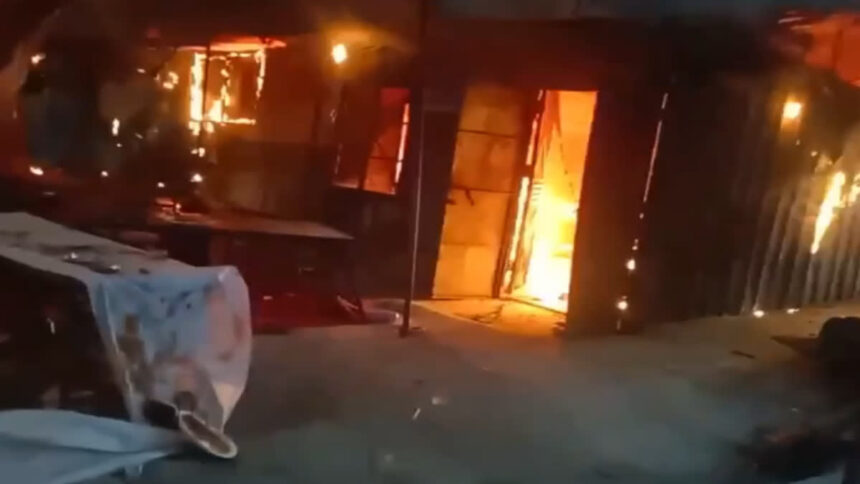
Officials of the fire department said the fire broke out at around 4:10 am in Rain Basera, situated near Shankar Vihar, which served as a shelter for daily wage labourers, homeless, and migrant workers. It is suspected that the fire began in the kitchen section of the building and then spread with great speed to the front part, where most inmates had been sleeping at that time. In a matter of minutes, thick smoke engulfed the narrow corridors, reducing visibility and leaving most residents scrambling to escape.
As many as three fire tenders were sent to the spot, and the firefighting teams successfully brought the flames under control after a long struggle of almost an hour. Emergency services managed to reach on time, yet two residents were found unconscious near the entry area and were later declared dead at the hospital. The identities of the deceased were reported to be males between 35 and 45 years old. Five more people, including two elderly males, have sustained injuries and were rushed to Safdarjung Hospital for treatment.
Preliminary reports suggest that the presence of highly inflammable materials such as mattresses, synthetic blankets, and wooden partitions contributed to the rapid spread of the fire. Many shelters in Delhi rely on compact, makeshift arrangements to house a large number of people—conditions which often turn fatal in case a fire breaks out.
Survivors recounted scenes of panic and chaos. “There was smoke everywhere. We could not see anything. People were shouting, trying to find the exit. Some of us broke windows to get out,” said a laborer who escaped with minor burns. Others alleged that the smoke alarms were not working and that fire extinguishers were either missing or out of service—claims officials say will be investigated thoroughly.
The Delhi Police have registered a case under sections of negligence and causing death due to careless conduct of the IPC, while the Forensic Science Laboratory has been asked to ascertain the exact cause of the fire. Investigators are also looking at whether an electrical short circuit—common in older shelter buildings—set off the blaze.
Government officials later visited the site, extending condolences to the families of the victims and assuring stern action against those found guilty. The Delhi Urban Shelter Improvement Board, which operates more than 200 night shelters in the city, has ordered an audit of all shelter homes in terms of fire-safety compliance and emergency preparedness.
This tragedy has amplified long-standing concerns related to the vulnerability of homeless populations, especially during winters. Night shelters in Delhi were meant to provide warmth and protection but have been criticized for inadequate infrastructure, overcrowding, poor ventilation, and lack of fire-safety installations. Social activists say that despite repeated recommendations for upgrade, the process has been slow and inspections irregular.
Every year, thousands of homeless people take shelter in these facilities during the bitterly cold months of December and January. According to experts, such inadequate facilities urgently need renovation, proper alarm systems, training of staff on how to act in case of emergencies, and frequent checks in the electrical systems and kitchens.
The Vasant Vihar incident also underlines the need for community awareness and extended support systems. Many of the shelters face manpower shortages, with an over-reliance on supervisors who work long hours without adequate training. A fire emergency at dawn, when residents are asleep and staff presence is minimal, can turn life-threatening within seconds.
The city is struggling to cope with this tragedy; the relatives of the victims demand accountability, while the survivors are still traumatized by the memories of deadly smoke-filled rooms. Compensation for the dead and injured, and a stricter implementation of safety norms, have been promised by the government. For now, the incident serves as a grim reminder: safety in public shelters is not optional; it is imperative. With reforms not in sight, the city may face more such disasters that could have been avoided, mainly during the high-risk winter season when shelters are lifelines for the most vulnerable citizens.