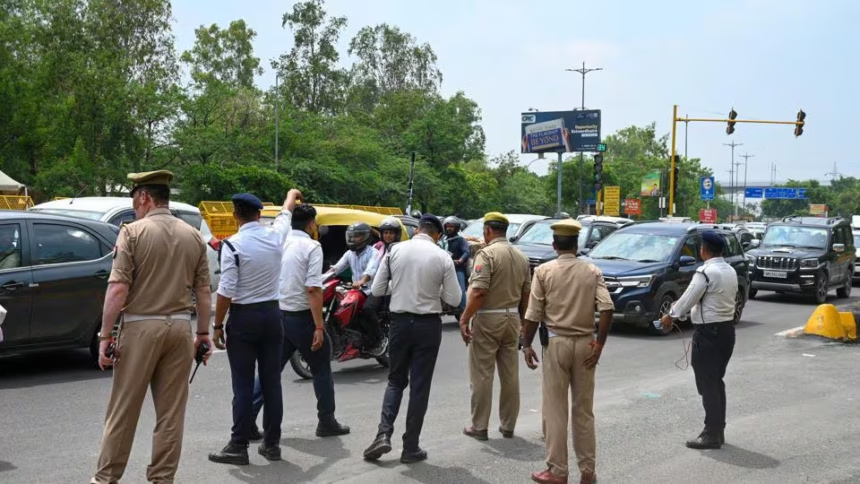
n a major administrative overhaul, Delhi Police’s traffic wing has been reunited under a single special commissioner-level officer, nearly five years after it was split into two separate zones. The move, approved by the Lieutenant Governor, aims to improve coordination and tackle persistent traffic management challenges in the capital.
Key Appointments and Structural Changes
- Neeraj Thakur (1994 batch) has been appointed Special Commissioner of Police (Traffic), ending the dual-zone structure implemented in 2020 during Rakesh Asthana’s tenure as Commissioner.
- IPS officers K Jegadesan (1998 batch) and Ajay Choudhary (1996 batch), who previously co-headed the traffic unit, have been reassigned:
- Jegadesan → Special CP (Protective Security Division) & Managing Director, Delhi Police Housing Corporation Ltd.
- Choudhary → Special CP (Vigilance Division) & Additional Charge of Special Police Unit for Women and Children (SPUWAC).
Officials said the decision is expected to streamline operations, improve staff deployment, and reduce congestion on arterial and VIP routes, especially during peak hours and festive seasons.
Other Key Transfers and Promotions
The reshuffle, spanning IPS batches from 1993 to 2016, includes several critical appointments:
- Robin Hibu (1993) → Special CP (Human Resource Division)
- Rajesh Khurana (1994) → Special CP (Provision & Finance Division)
- Devesh Chandra Srivastava (1995) → Special CP (Crime) & Perception Management/Media Cell
- David Lalrinsanga (1995) → Special CP (Operations – PCR & Communication) & SPUNER
- Anil Shukla (1996) → Special Cell & Tech/PI Division
- Manish Kumar Agarwal (1996) → Special CP (Intelligence) & Public Transport Safety
- Atul Katiyar (1997) → Special CP (Welfare) & Licensing/Legal Division
- Vijay Kumar (2007) → Joint CP (CP Secretariat & OSD to CP/Delhi)
- Rajiv Ranjan Singh (2010) → Additional CP (Eastern Range)
- Rohit Rajbir Singh (2015) & Vikram K Porwal (2016) → DCPs (CP Secretariat, Crime & Administration)
Why This Matters
The reunification of the traffic wing under a single chief is expected to enhance efficiency, reduce bureaucratic delays, and provide better oversight over Delhi’s complex traffic network. Experts say this move could significantly improve traffic flow and enforcement, particularly on busy roads and during festivals.