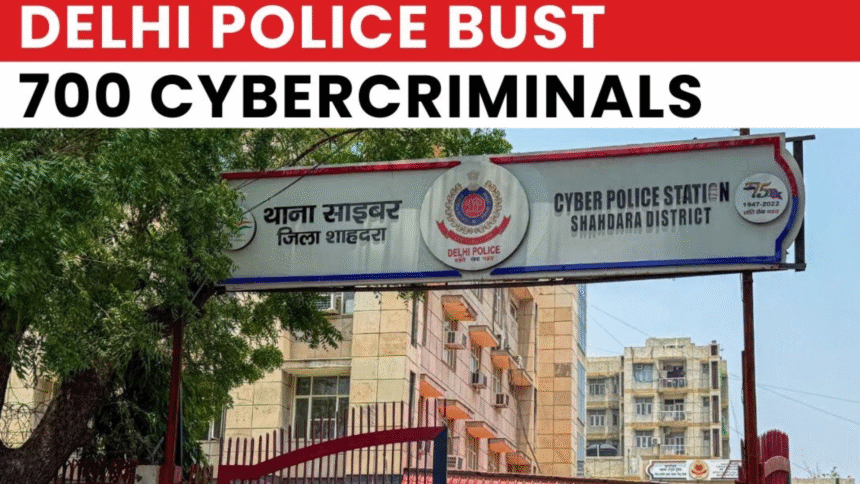
NEW DELHI, NOVEMBER 21 – In one of the biggest anti-cybercrime operations in recent times, Delhi Police have busted a sprawling ₹1,000 crore cyber fraud network and detained over 700 persons following a coordinated, 48-hour crackdown across several States. Codenamed “Operation Cyber Hawk,” the multi-agency exercise primarily targeted organised cyber criminal gangs running fake call centres, online scam modules and advanced digital fraud ecosystems across the national capital and its immediate environs.
The operation was led by the Intelligence Fusion & Strategic Operations unit, which conducted synchronized raids over several hotbeds that harbored illegal cyber operations. The crackdown, officials said, was aimed at rackets engaged in phishing scams, fake customer support facilities, fictitious investment schemes, and business-email compromise networks. Most of the groups were structured with separate teams handling outreach, data harvesting, money muling, and technical execution.
Largest Crackdown in Recent Years
Arrests, which have crossed more than 700 in number, point to the alarming spread of cybercrime in the National Capital Region. Police officials claimed that the network they uncovered was involved in duping thousands of victims both within India and abroad. These frauds included phishing links for banking credentials, to impersonating major service providers such as banks, technology companies, courier services, and digital wallets.
The raids also uncovered several illegal call centres running from residential buildings and rented office spaces. In various instances, to carry out the scam, callers used VoIP calling, spoofed international numbers, fake websites, and remote access software in a bid to hoodwink victims into giving them access to their devices. Once this was ensured, funds were siphoned off into a network of shell accounts designed to evade detection.
How the Scams Worked
Preliminary investigation has shown that most victims were targeted with pop-up alerts that reportedly warned them about security breaches on computers or financial accounts. These alerts would then reroute them to call the fake customer service helplines run by fraudsters. Once connected, victims were convinced to download remote-access tools. The fraudsters soon had full visibility of all their banking apps and OTPs.
Other popular methods involved different investment opportunities offering very high returns. Victims were asked to transfer money for “activation fees,” “processing charges,” or “verification deposits.” Once the transaction was completed, the scammers vanished.
Police said the investigation also found that a large network of money mules was recruited through social media and job portals. These individuals were paid a commission to route stolen money through their accounts, making the tracing of transactions difficult.
Seizures and Evidence Collected
During the raids, hundreds of mobile phones, SIM cards, computers, routers, forged documents, cash, and digital evidence were recovered by authorities. Recovered detailed ledgers from the computers showed daily targets assigned to scam agents, incentive structures, and scripts to manipulate victims.
Police officials say this level of organization is indicative of a syndicate-style setup, with operations resembling corporate sales floors — complete with managers, team leaders, and training modules. Access to victims’ data was often purchased through black-market sources, revealing the deep integration of cybercrime networks with illegal data brokers.
What Makes Operation Cyber Hawk Significant
This crackdown is considered one of the most effective cybercrime operations conducted by Delhi Police for a number of reasons:
Extent of arrests: More than 700 suspects detained in only 48 hours, signalling extensive involvement.
Financial magnitude: Fraud trail of nearly 1,000 crore unearthed, which is one of the highest in recent years.
Inter-state network: Many activities spanned Delhi, NCR, Haryana, Uttar Pradesh, and even remote towns that supplied manpower and resources.
Digital sophistication includes VoIP masking, remote access malware, OTP intercept techniques, and shell corporations.
According to authorities, the operation is far from over, as further arrests are expected once digital forensic teams have done their analysis of seized devices.
Future Steps and Warnings to the Public Accordingly, authorities have called upon people to be wary of unsolicited calls, suspicious links, or demands for remote access and financial schemes that sound “too good to be true.” The advice is to verify the helpline numbers from the official website, not to share OTPs, and promptly report such suspicious activities on the national cybercrime reporting portal. The Delhi Police underlined that cybercrime had grown into a highly organized ecosystem and tackling it required both advanced policing and public awareness. Operation Cyber Hawk, they pointed out, should serve as an adequate message to the cybercriminals who of late have targeted India’s burgeoning digital population.