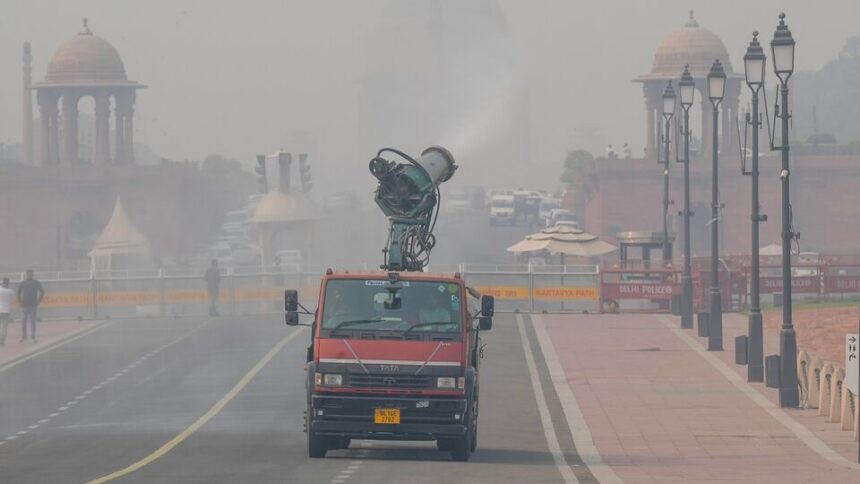
With Delhi struggling with poor air quality, the Delhi Environment Minister, Manjinder Singh Sirsa, stated that plans to begin cloud seeding in the next 2–3 days, depending on weather conditions, have been made. The bold step is intended to counteract the city’s rising pollution rate, especially around the time of Diwali when air quality is usually at its worst.
What is Cloud Seeding
Cloud seeding is a weather modification process that entails releasing substances into the atmosphere in order to stimulate cloud condensation and rain. The process, in Delhi’s instance, seeks to cause artificial rain for purging the air of toxic pollutants. The project is being led by the Delhi government, in partnership with IIT Kanpur and the India Meteorological Department (IMD).
The project will deploy five specially adapted Cessna planes to seed rain-inducing material over sections of the capital. The chief aim is to cleanse airborne toxins, thus enhancing air quality and lowering particulate emissions, particularly in the midst of bad winter pollution episodes.
Preparations and Readiness
All preparations for the cloud seeding operation are in place, according to Minister Sirsa. Pilots have been trained for four days, and the aircraft have been put through tests to confirm their preparedness. The operation is to begin after Diwali, as part of the city’s overall initiatives to mitigate deteriorating air quality during the festive season.
Strategic Timing and Coordination
The schedule of the cloud seeding operation is of utmost importance. The IMD has detected a window of good weather conditions in the next few days, which is vital for the success of the operation. Minister Sirsa insisted that, having received the green signal from the IMD, the government stands ready to undertake the cloud seeding exercise within three hours of receiving the go-ahead.
This is in line with a holistic effort to check air pollution in Delhi. The Commission for Air Quality Management (CAQM) has already enforced Stage 1 of the Graded Response Action Plan (GRAP-1), which involves practices like restricting the operation of diesel generators and managing construction activities. Besides, the Supreme Court has allowed the sale and utilization of green crackers during Diwali as a way of balancing festive activity with pollution mitigation.
Wider Implications and Future Directions
Although cloud seeding presents a potential short-term fix for Delhi’s air pollution crisis, experts warn that it is no miracle cure. Whether cloud seeding can sharply reduce air pollution is still in the process of being researched. Moreover, the success of the exercise relies heavily on certain atmospheric conditions, which are not always likely to be favorable.
However, the cloud seeding project is a positive move by the Delhi government in seeking out-of-the-box solutions to environmental problems. It highlights the value of science partnerships and technology interventions towards solving complicated problems such as air pollution.
In the future, success for this pilot program may open the door to full-scale use of cloud seeding and other geoengineering methods across much of India where similar environmental threats exist. But it is critical that these kinds of interventions be part of an overall, multi-pronged approach involving longer-term solutions like tougher emissions controls, investments in clean energy, and consumer education campaigns.
By and large, Delhi’s cloud seeding project represents an important milestone in the city’s battle against air pollution. While it can provide a temporary reprieve, lasting enhancements to air quality will depend on ongoing innovation, policy implementation, and citizen engagement. The next few days will prove decisive in ascertaining the success of this new method in purifying Delhi’s air and establishing a precedent for other cities to emulate.