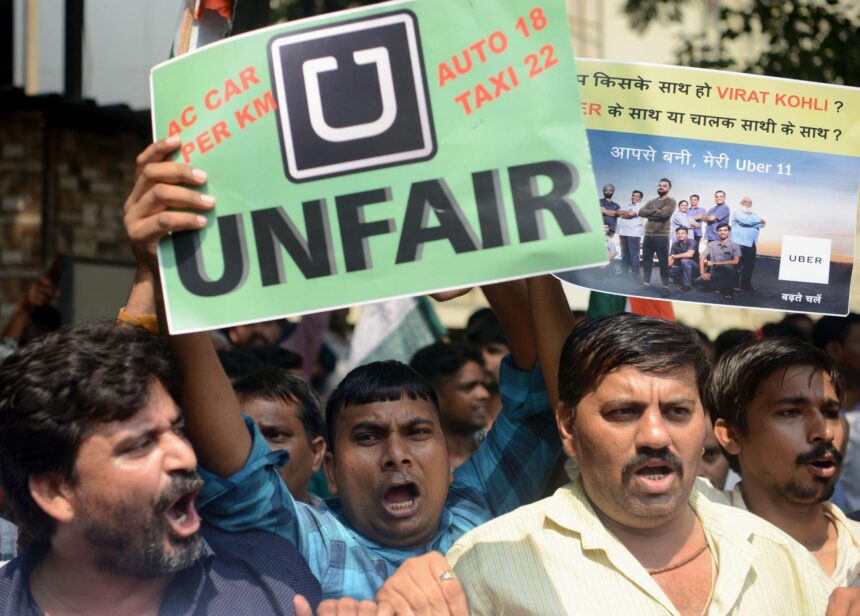
People had a time getting taxis on Saturday. This was because many drivers for companies like Ola, Uber and Rapido did not work that day. Drivers over the country including Delhi and the area around it did not drive their cars. They wanted to show that they are not happy with some things. This big protest, called the All India Breakdown made it tough for people to get around. Many people had to use the metro, buses and shared autos of taxis. The All India Breakdown caused a lot of problems, for people who needed to get. Ola, Uber and Rapido were all affected by the protest.
The strike was put together by a group of gig worker unions, including the Telangana Gig and Platform Workers Union and the Indian Federation of App-Based Transport Workers. Many drivers who work with taxi apps well as auto-rickshaw and bike-taxi services turned off their apps and did not work. They did this to push for a lot of changes that they want like getting paid more having working conditions and being protected by rules. The gig worker unions, like the Telangana Gig and Platform Workers Union want to see these changes happen to help the drivers.
Core Grievances Behind the Strike
The main issue with the protest is that people are unhappy about the way fares are decided and how little money drivers are making. Drivers have been saying for a time that companies like Ola, Uber and Rapido get to choose the fares on their own, which means drivers are making less money even though it costs more to buy fuel and keep their cars in good shape. The leaders of the unions say that the problem is worse because the government is not making sure that companies like Ola, Uber and Rapido follow the rules about minimum fares that were supposed to be, in place according to the Motor Vehicle Aggregator Guidelines, 2025.
Lots of drivers in the Delhi-NCR region are saying that it is really tough to make a living these days. One driver said “I drive for Ola and I also drive for Uber”. He said “We are on strike because the rates that Ola and Uber pay us are very low and they do not cover the money we need to spend every day on things like food and petrol, for our cars so we are striking against Ola and Uber”.
People are worried about safety. That is one of the reasons they are protesting. Many drivers said that even though they have safety things like panic buttons in their vehicles they are still not safe when they are driving around. The Safety concerns of drivers are an issue because they do not get enough help or money when something bad happens to them. Drivers face risks, on the road and the safety concerns of drivers are not being taken care of.
Impact on Commuters and Transport Networks
People in Delhi had a time getting around because the drivers were not working for most of the day. This meant that commuters had to wait for a time to get a ride pay more money than usual or they could not even get a ride at all when they used popular apps.
Many people decided to use the metro, city buses or shared auto-rickshaws to get where they needed to go which made these services very busy especially during the busy hours when everyone is going to or coming home, from work.
The city authorities did not make any rules, for transport in an emergency. They just told people to think about how they will travel and use buses and trains if they can. The city authorities want people to use transport when it is possible for them to do so. This way people can plan their travel and the city authorities will not have to impose any emergency transport measures on the city. The city authorities are reminding people to plan their travel and use transport.
Unions Call for Government Action
The unions have some things they want and these are:
Government-notified minimum base fares for app-based transport services
Transparent fare regulation with consultation from worker unions
Ban on the use of non-commercial vehicles for fare-based services
Better social security and safety standards for drivers
Union leaders have urged both the central and state governments to take urgent action, warning that without meaningful reforms, gig workers might resort to further collective actions in the coming weeks.