Delhi Explores New Inter-State Bus Terminus at Bhalswa Landfill Site
The Delhi government and the Municipal Corporation of Delhi are considering a major transformation of the Bhalswa landfill site in north Delhi by setting up a new Inter-State Bus Terminus. Officials confirmed that discussions are underway to assess whether the reclaimed land can be used to build a large transport hub for buses arriving from northern states.
If the plan moves forward, the proposed ISBT could play a key role in easing traffic congestion, reducing pollution, and decongesting existing bus terminals in the capital, especially the overburdened Kashmiri Gate ISBT.
Bhalswa Landfill Reclamation Nears Completion
70 Acres of Land Set for Transformation
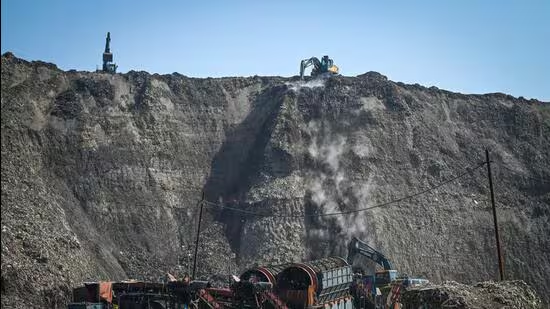
The Bhalswa landfill, one of Delhi’s largest garbage dumping grounds, is spread over around 70 acres. The site has been under reclamation through biomining as part of the city’s long-term plan to eliminate legacy waste.
According to officials, about 4.5 acres of land have already been reclaimed so far. The Delhi government has set a target to fully reclaim the entire landfill by December 2026.
Once cleared, the land is expected to be repurposed for public use, infrastructure development, and green spaces.
Proposal for a New ISBT Gains Attention
Feasibility Study to Decide the Way Forward
A senior official who attended a recent review meeting between the Delhi government and MCD said that the idea of building an ISBT on the reclaimed Bhalswa land was discussed in detail.
The official said a feasibility study will be conducted to examine factors such as traffic flow, connectivity, environmental impact, and passenger demand.
If the study supports the proposal, a detailed project report will be prepared in the coming days to outline costs, timelines, and design plans.
Strategic Location Makes Bhalswa an Ideal Choice
Gateway for Buses From Northern States
Officials believe the Bhalswa site has a strategic advantage due to its location at the junction of GT Karnal Road and the Outer Ring Road near Mukarba Chowk.
This area lies along major transport corridors that connect Delhi with Haryana, Punjab, Himachal Pradesh, Chandigarh, and Jammu and Kashmir.
If developed as an ISBT, the terminal would primarily cater to buses entering Delhi from these northern states, keeping heavy inter-state bus traffic away from central parts of the city.
Pressure on Kashmiri Gate ISBT Continues to Rise
Oldest and Busiest Terminal Faces Capacity Issues
Operational since 1976, Kashmiri Gate ISBT is Delhi’s oldest and largest inter-state bus terminal. Over the years, the number of buses and passengers using the terminal has increased significantly.
This has resulted in severe traffic congestion on GT Road and surrounding arterial roads. The high volume of buses also contributes to vehicular emissions and longer travel times for commuters.
Officials say shifting a portion of inter-state bus operations to a new terminal in north Delhi could significantly reduce this pressure.
How a New ISBT Could Ease Delhi’s Traffic Woes
Fewer Buses on Inner-City Roads
According to officials, if the Bhalswa ISBT becomes operational, it could remove hundreds of inter-state buses from Delhi’s internal road network.
This would help ease congestion on key stretches such as:
- Ring Road
- Outer Ring Road
- National Highway-44
Reduced bus movement in central Delhi could also improve travel speeds for private vehicles, city buses, and emergency services.
Delhi Traffic Police Suggest Alternative Bus Routes
Expressways to Take the Load Off City Roads
Earlier, the Delhi Traffic Police had recommended a new route for government and private buses operating between Kashmiri Gate ISBT and northern states.
The proposal suggested diverting buses via the Dehradun Expressway and the Eastern Peripheral Expressway. This move aims to bypass crowded city roads and reduce traffic bottlenecks in residential and commercial areas.
Officials say a new ISBT at Bhalswa would complement this plan by acting as a terminal closer to Delhi’s outer boundary.
Landfill Sites to Be Reimagined After Clearance
Green Spaces and Public Infrastructure Planned
The proposal for the Bhalswa ISBT aligns with broader plans for reclaimed landfill sites across the city.
Standing committee budget proposals have stated that once the Bhalswa, Ghazipur, and Okhla landfill sites are cleared, the land will be redeveloped with:
- Green spaces
- Public amenities
- Infrastructure and development projects
Officials say the aim is to turn former garbage dumps into productive urban spaces that benefit residents.
Massive Progress in Legacy Waste Removal
Millions of Tonnes Cleared So Far
MCD officials revealed that around 15 million tonnes of legacy waste have already been cleared from the three major landfill sites as of January 2026.
Additionally, bids have been invited for the removal of another 14 million tonnes of garbage under the third phase of waste clearance.
The Delhi government and MCD have jointly committed to completely eliminating legacy waste from these sites by December 2026.
Environmental and Social Benefits of Reclamation
Cleaner Air, Better Living Conditions
Clearing landfill sites like Bhalswa is expected to bring significant environmental benefits, including:
- Reduced air pollution from landfill fires
- Lower groundwater contamination
- Improved public health for nearby residents
For years, communities living around the Bhalswa landfill have complained about foul odours, smoke, and health issues. Officials say redevelopment will improve quality of life in these areas.
Challenges Ahead for the ISBT Proposal
Execution and Environmental Safeguards Key
While the proposal has generated interest, experts caution that several challenges remain.
Authorities will need to ensure that the reclaimed land is structurally safe for heavy infrastructure and that proper environmental safeguards are in place.
Traffic planning, last-mile connectivity, and coordination between multiple agencies will also be critical to the success of the project.
What Lies Ahead
If the feasibility study gives a green signal, the Bhalswa ISBT could become one of the most significant transport infrastructure projects in north Delhi in recent years.
By transforming a former garbage dump into a modern bus terminal, the project could reshape travel patterns, ease congestion, and signal a shift toward more sustainable urban planning.
For now, officials say the focus remains on completing landfill reclamation on schedule and preparing a detailed proposal that balances transport needs with environmental responsibility.