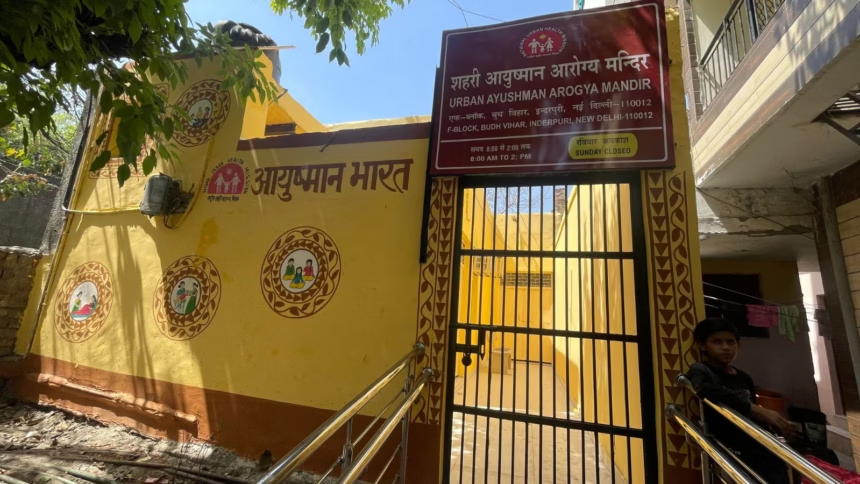
The Delhi government has announced the addition of 187 new Arogya Mandirs to the existing neighbourhood-level healthcare facilities by December 2025, in addition to the 168 operational centres in various parts of the city, to improve comprehensive medical care for residents.
The Arogya Mandir initiative is part of the central government’s Ayushman Bharat scheme and marks a shift from the basic “Mohalla Clinic” model to full-fledged neighbourhood health centres. The move is directed at improving quality healthcare services near the homes of the people so that the dependence on hospitals for routine ailments and primary healthcare services becomes minimal. Chief Minister Rekha Gupta said, “The idea is to ensure timely medical attention for residents closer to their homes, reducing unwarranted hospital visits and improving health outcomes in general.”
Services Offered
The idea is that new Arogya Mandirs will be comprehensive care facilities and not mere clinics, offering all aspects of healthcare. Some of the key services include:
OPD services include outpatient care for common ailments like fever, infection, and minor injuries.
Diagnostic tests and medicines are provided free of charge to ensure patients do not face financial barriers to essential care.
Maternal and child health services include antenatal, neonatal care, and postnatal care.
Family planning, counselling, and other adolescent and reproductive health services.
Screen for and manage both communicable and non-communicable diseases, including diabetes, hypertension, and tuberculosis.
Specialized services for the eye, ENT, basic dental care, elderly health management, and mental health support.
Emergency care for minor accidents and urgent conditions.
It has been reiterated that all centres would conform to the IPHS norms and would maintain standards uniformly on infrastructure, staffing, equipment, and medicines. This is an important step toward standardising service delivery across all neighbourhood centres.
Infrastructure and Operational Model
However, unlike the earlier Mohalla Clinics, the new Arogya Mandirs will be operating largely from government-owned premises rather than rented ones. For example, existing sub-health centres and PHCs are being upgraded to meet enhanced standards without disrupting the service at these facilities while expanding capacity.
Each centre will be adequately manned with qualified doctors, nurses, technicians, and support personnel to ensure consistent and reliable care for the patients. Since the centres will have integrated diagnostics and pharmacy services, most of the healthcare needs of residents can be completed in a single visit, unlike earlier models.
Competitive Advantage
Expansion could not have come at a better time, particularly with Delhi’s growing population, a rising prevalence of non-communicable diseases, and recurrent environmental health challenges such as air pollution. Bringing healthcare closer to people’s homes, the initiative is supposed to decrease congestion at tertiary hospitals, therefore improving health outcomes through early intervention and preventive care.
The government also expects the model of Arogya Mandir to build up trust among people and raise awareness in the community for regular checkups and precautionary measures against health disorders. It aligns with the broader goal of UHC, which is to provide affordable and accessible care for all.
Challenges Ahead
While the plan is ambitious, several factors would determine its success:
Recruitment and retention of staff are important because quality of care is dependent on the presence of adequate qualified personnel.
Supply chain management of medicines and diagnostic equipment must be efficient if disruptions are to be avoided.
The involvement of the community will be essential so that people take up the facilities and build confidence in public health.
Periodic audits for monitoring and evaluation will be undertaken to ensure that centres maintain service quality as specified under the IPHS standards.
Looking Ahead The addition of the 187 new Arogya Mandirs will bring the operational centres in Delhi to 355 by the end of December 2025. This expansion represents one of the largest efforts to scale primary healthcare in a metropolitan area in India. The government has also indicated that over the long term, more than 1,100 such centres will be established across the city to cover all wards comprehensively.
If implemented effectively, this initiative could transform the healthcare landscape of Delhi-offering access to quality care within the local community. By addressing preventive and curative needs, the expansion of Arogya Mandir is one of the very important steps toward improved health outcomes and equitable access to healthcare for all residents.