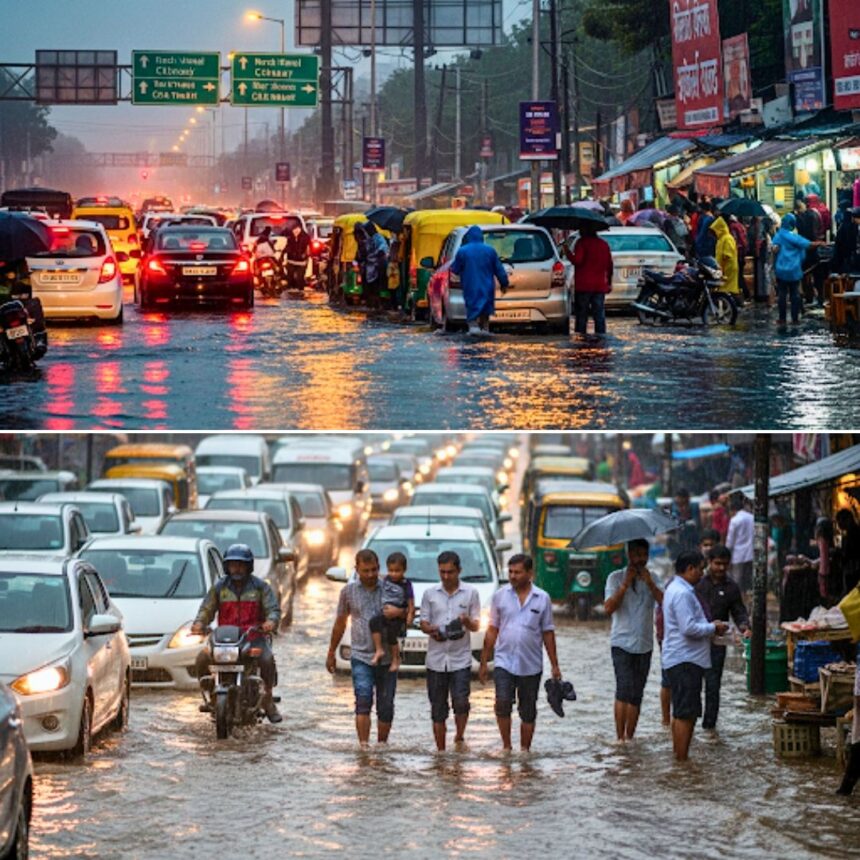
On 30th September 2025, Tuesday, Delhi-NCR witnessed an abrupt and heavy rain shower, bringing relief from the scorching heat but in the process leaving the capital city in a state of chaos. The waterlogging was extensive, traffic jams were severe, and flights were affected, only pointing at the city’s never-ending crisis of poor infrastructure and urban planning.
A Sudden Downpour
The India Meteorological Department (IMD) had declared an orange alert for Delhi-NCR as heavy rains and thunderstorms swept the area. The sudden weather condition left several residents unprepared, resulting in severe disruptions to their daily routines.
Traffic Chaos All Over the City
Commuters were severely inconvenienced as waterlogged traffic and jams became the norm. Among the notable trouble zones were:
Zakhira Underpass: People were spotted wading in knee-deep water, pointing to the city’s poor drainage system.
Free Press Journal
Tikona Park and Jamia Millia Islamia: Traffic moved at a snail’s pace as cars slowed down because of waterlogging and potholes.
NH-48 Near Radisson Hotel: A 25-minute long traffic s-longwas witnessed as cars going towards Gurugram were slowed down.
These accidents highlight the city’s susceptibility to excessive rain and the urgent requirement for better infrastructure to manage such phenomena.
Air Travel Disruptions
The bad weather also affected air travel. Airlines such as IndiGo, Air India, and SpiceJet announced advisories alerting passengers of possible delays and cancellations because of poor visibility and runway conditions.
Political Reactions
The sudden rain and its aftermath were criticised by political circles. The Aam Aadmi Party (AAP) faulted Chief Minister Arvind Kejriwal’s assertion of effective handling, citing persistent civic problems and lack of preparedness for the weather.
The Need for Urban Resilience
This event is a stark reminder of the vulnerability of Delhi to weather events. Delhi’s infrastructure, including its drainage systems, cannot cope with such amounts of rainfall, and hence, there are severe disruptions everywhere. Experts point out the need for overall urban planning incorporating strong drainage systems, improved traffic management, and climate-resilient infrastructure to reduce the effects of such events in the future.
Overall, although the excessive rains provided temporary relief from the heat, they revealed the inherent issues of Delhi in infrastructure and urban planning. It is important to address such issues to make the city prepared for future weather disturbances.